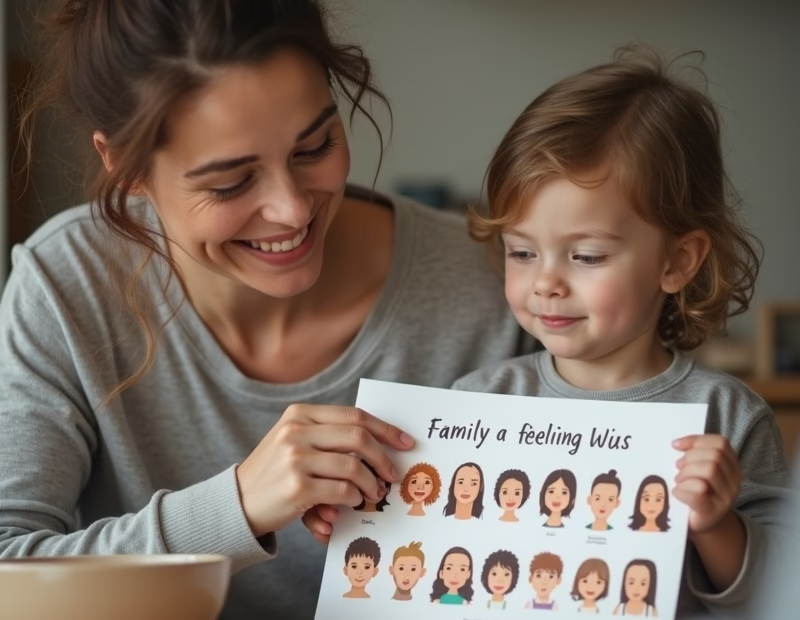
To use a feelings chart for kids at home, place it somewhere easy to see, introduce it during a calm moment, and use it for short daily check-ins. Let your child point, name, or describe a feeling without pressure, then respond with simple support like listening, helping them calm down, or solving the problem together.
Why feelings visuals can help at home
Children often feel big emotions before they have the words to explain them. A visual tool gives them something concrete to look at and use. Instead of asking a broad question like “What is wrong?” you can point to a chart and ask, “Which one feels closest right now?”
A feelings chart for kids can be helpful because it makes emotional language more visible in everyday life. It can also slow down tense moments. When a child points to frustrated, worried, excited, or tired, you have a clearer starting point for what to do next.
Feelings visuals are not only for hard moments. They also work well when children are happy, proud, calm, curious, or silly. Seeing a full range of emotions helps children learn that all feelings are normal, even when some behaviours still need guidance.
Choose the right kind of visual
The best feelings visual is the one your child can understand and use. Keep it simple. Some children do well with basic faces showing a few emotions. Others prefer more detailed words, colours, or examples.
Good options for home use
- Simple face chart: Useful for toddlers and younger children who respond well to pictures.
- Word-and-face chart: Helpful for preschoolers and school-age children who are starting to connect words with feelings.
- Feelings wheel: A good option for older children who can tell the difference between emotions like disappointed, nervous, lonely, and overwhelmed.
- Mini portable card: Useful for children who need support in the car, during homework, or while moving between homes.
If you would like a ready-made option, you can explore the family resources in the tools and printables section. A printable works best when it is easy to revisit every day, not just once.
Where to place your feelings chart
Location matters more than many parents expect. If the chart is hidden in a drawer, it will not become part of family life. Put it where your child can see and reach it.
Useful places to try
- On the fridge for morning and after-school check-ins
- Near a calm corner or reading area
- By the front door for transitions
- In the bedroom for bedtime reflection
- At a homework table for school-age children
Choose one main spot first. Once the routine is established, you can add a second copy in another area if needed.
Introduce it during a calm moment
A common mistake is bringing out the chart only during a meltdown. It is much easier for children to learn how to use a visual when they are calm. Start at a quiet time, perhaps after breakfast or during a relaxed part of the evening.
You might say, “This is our feelings chart. Sometimes it is hard to find the right word, so we can use this to help.” Then model it yourself. For example, “I feel tired this morning” or “I feel proud that we cleaned up together.”
This shows your child that the chart is a normal family tool, not a test or a punishment.
How to use a feelings chart for kids in daily routines
The easiest way to make a feelings chart for kids useful is to attach it to routines that already happen. Short, regular check-ins usually work better than long conversations.
Morning check-in
Try a one-minute check before leaving home. Ask, “How are you feeling as we start the day?” If your child points to nervous, you might respond, “Thanks for showing me. Do you want a hug, a quiet minute, or help thinking about school today?”
After-school reset
Many children need time to reconnect after school or childcare. Instead of asking several questions at once, try the chart first. A child may point to tired or overwhelmed before they are ready to talk. That can help you choose the next step, such as a snack, quiet play, or outdoor time.
Bedtime reflection
At bedtime, ask your child to choose one feeling from the day and tell you what went with it. This keeps emotional language connected to real experiences. It can also help children notice that feelings change across the day.
During sibling conflict
When children argue, a chart can slow the pace. You can say, “Let us pause. Show me how you feel first.” Once each child has named or pointed to an emotion, you can move to problem-solving more calmly.
Practical phrases parents can use
You do not need perfect wording. Calm, simple language is enough. Here are examples that work well with many ages:
- “Can you point to the feeling that fits best?”
- “Do two feelings fit at the same time?”
- “I can see this feels big right now.”
- “Thank you for showing me.”
- “What would help next: a cuddle, water, a break, or talking?”
- “It is okay to feel angry. I will help you stay safe while you are angry.”
These phrases keep the focus on understanding and support. They also help children learn that naming a feeling is only the first step. The next step is finding what helps.
What to do after your child identifies a feeling
A chart is most useful when it leads to a supportive response. If your child points to a feeling, try one of these next steps:
1. Reflect
Repeat what you heard. “You are feeling disappointed.” This helps your child feel understood.
2. Connect the feeling to the situation
“You are disappointed because playtime ended.” This builds understanding over time.
3. Offer a small choice
“Do you want help, a drink of water, or a minute alone?” Small choices give children some control.
4. Set limits if needed
You can accept the feeling and still guide behaviour. “It is okay to feel angry. I will not let you hit.”
5. Revisit later
If your child is too upset to talk, use the chart briefly and return to the conversation once they are calmer.
Examples by age
Toddlers
Keep it very simple. Use two to four clear feelings such as happy, sad, angry, and tired. Let your toddler point rather than answer with words. Pair the chart with short phrases like, “Sad because Daddy left for work,” or “Tired, so now we rest.”
Preschoolers
Preschoolers often enjoy using faces and copying your language. Add a few more common feelings like worried, excited, and frustrated. Keep check-ins brief and regular.
School-age children
Older children can handle more detailed visuals and deeper conversations. They may prefer a chart with extra feeling words or a simple journal prompt beside it. Ask what would help them use it comfortably.
Older children and mixed-age homes
If you have children of different ages, use one main chart and adapt your language. Younger children may point to faces while older siblings use specific words. A shared family tool can still work well.
How to make it feel natural, not forced
Some children take to feelings visuals quickly. Others resist at first. That does not mean the idea is not helpful. It may just need a gentler approach.
- Use it yourself so your child sees it as normal
- Keep check-ins short
- Do not insist on eye contact or long explanations
- Let pointing count as communication
- Accept “I do not know” as a real answer
- Try again later instead of pushing
The goal is to open a door, not to force a conversation every time.
Simple home routines you can copy today
The fridge check-in
Keep the chart on the fridge. While offering breakfast or an after-school snack, ask each family member to point to one feeling. Adults can join in too. This makes emotional awareness part of normal daily life.
The calm corner routine
Place the chart in a quiet space with a cushion, soft toy, or water bottle. If your child needs to reset, walk there together and start with the chart before anything else.
The bedtime look-back
Ask, “What feeling showed up most today?” Follow with, “What helped?” This links feelings with coping skills in a simple way.
Common mistakes to avoid
- Using the chart only in difficult moments: Practice when things are calm too.
- Correcting the child too quickly: If they say angry but you think they are sad, stay curious rather than arguing.
- Asking too many questions: One or two is often enough.
- Expecting instant change: Emotional language grows slowly with repetition.
- Turning it into a behaviour tool only: Use it for positive feelings as well.
When a child does not want to use it
If your child refuses the chart, step back and reduce pressure. You can still model feelings language without asking them to participate every time. For example, “I see this is a hard moment. We can talk when you are ready.”
You can also try another format. Some children prefer drawing a face, choosing a colour, or using a very small card rather than a full poster. If a printable chart feels too formal, turn it into a simple game by asking, “Which face looks most like your day?”
Helpful tools and gentle extras
If you want something more hands-on, the printables collection can help you find simple resources to use at home. A visual works best when it is easy to use, easy to see, and part of familiar routines.
Some families also like adding a creative activity after a check-in. If that suits your child, a simple emotions-themed craft resource can make the idea more concrete. One optional example is Crafting Your Emotions Kit, which may suit children who express themselves better through hands-on play than through conversation alone.
If you are looking for more practical family resources, you can also browse the main Zadjecu home page for related guides and ideas.
Keep the focus on connection
A feelings visual is not about getting the “right” answer. It is a way to help your child feel seen and supported while building useful language over time. The smallest routines often matter most: one calm question, one honest feeling, and one helpful next step.
Used consistently, a chart can become a quiet part of family life that helps children understand themselves a little better each day.
If you would like a simple resource to start with, take a look at the tools and printables section for family-friendly visuals you can use in everyday routines at home.
FAQ
What age can a child start using a feelings chart?
Even toddlers can begin with a very simple chart that shows a few clear faces or emotions. Older children can use more detailed charts with extra feeling words.
How often should we use a feelings chart for kids?
Short daily use often works best. Try one or two check-ins during natural routines such as morning, after school, or bedtime rather than using it only during stressful moments.
What if my child points to the same feeling every time?
That can still be useful information. Reflect the feeling calmly and look at patterns in the day. Your child may need more words, more support, or simply more time to notice emotional changes.
Can a feelings chart help during tantrums or meltdowns?
Sometimes, yes, but it is usually easiest to teach the chart during calm moments first. In a very upset moment, keep language simple and focus on safety and calming before expecting much discussion.
Should I correct my child if I think they chose the wrong feeling?
It is usually better to stay curious than to correct them quickly. You can say, “You picked angry. I wonder if there is some sadness in there too.” This keeps the conversation open and respectful.
Do I need a printable, or can I make my own?
Either is fine. A printable can save time, but a homemade chart with drawn faces or written feeling words can work just as well if your child understands it and will use it.
A feelings chart for kids can be a gentle, practical tool for helping children notice emotions and ask for support. It works best when you use it in calm daily routines, keep expectations simple, and focus on connection rather than perfect answers.
Start small, stay consistent, and let the chart become part of everyday family life. Over time, a feelings chart for kids can make emotional conversations feel more natural for both you and your child.
None