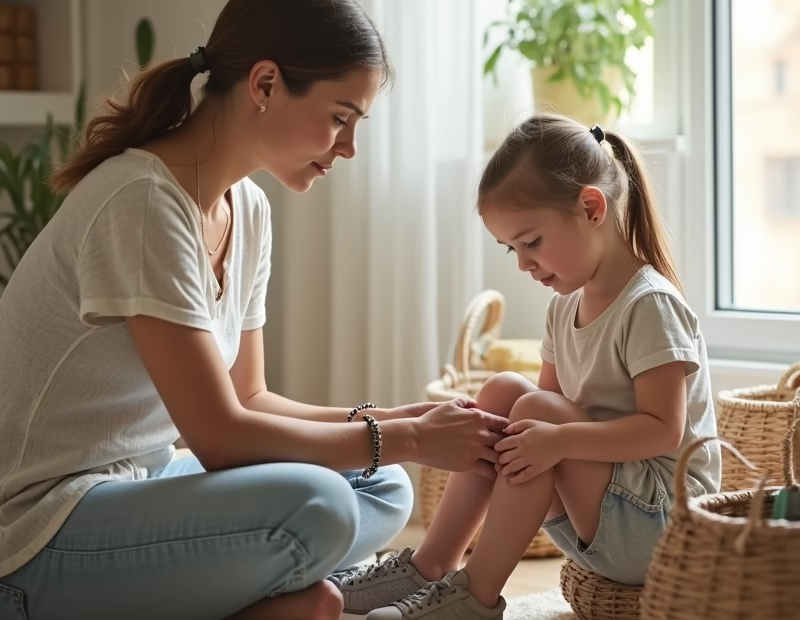
To build child independence at home for ages 4 to 6, give your child small daily responsibilities, keep routines predictable, offer limited choices, and allow extra time for them to try tasks without rushing in too quickly.
Why independence matters at ages 4 to 6
Between ages 4 and 6, many children want to say, “I can do it myself.” That drive is a healthy part of development. At this age, children are learning how routines work, how to follow simple steps, and how to cope with small frustrations. When parents make space for practice, children slowly build confidence, responsibility, and problem-solving skills.
Independence at this age is not about leaving a child to figure out everything alone. It means teaching, breaking tasks into smaller parts, and offering support that gradually becomes lighter. You stay close, but you do not take over every step.
If you are looking for more support around development, the child development section can be a helpful place to explore related topics.
What independence looks like for ages 4 to 6
Child independence at home often shows up in ordinary daily tasks rather than big milestones. A child in this age group may be able to:
- put on simple clothing with some help
- place dirty clothes in a basket
- wash hands and dry them properly
- help set the table
- put toys back in the right place
- carry a backpack or lunch bag
- choose between two suitable options
- follow a short routine with reminders
- help pack for an outing
- pour water from a small jug with supervision
Some 4-year-olds will need much more help than some 6-year-olds, and that is normal. The most useful question is not, “What should all children this age do?” but, “What small next step is realistic for my child?”
Start with routines before responsibilities
Independence grows more easily when children know what to expect. Predictable routines reduce the amount of reminding, negotiating, and correcting that parents need to do. When the same steps happen in the same order each day, children begin to remember them.
Good routines to start with
- morning routine: toilet, wash hands, get dressed, eat breakfast, brush teeth, shoes on
- after-school routine: bag away, wash hands, snack, quiet activity
- bedtime routine: tidy, bath or wash, pajamas, brush teeth, story, bed
Keep routines short enough for your child to manage. A five-step routine is often more realistic than a long list.
How to make routines easier
- Use the same order each day.
- Teach one part at a time.
- Give simple instructions such as “First socks, then shirt.”
- Allow extra time so your child is not always being hurried.
- Use visual support if needed, such as a simple checklist or picture routine.
If your child responds well to visual structure, you may find something useful in the tools and printables section.
Give small jobs that feel real
Children are more likely to cooperate when they feel genuinely helpful. Small household tasks can build both independence and a sense of belonging. The key is choosing tasks that are simple, safe, and repeated often enough for your child to improve.
Age-appropriate jobs to try
For ages 4 to 6, suitable jobs may include:
- putting napkins on the table
- matching socks from the laundry
- placing books back on a shelf
- wiping the table with help
- feeding a pet with supervision
- throwing rubbish in the bin
- putting shoes in their place
- watering plants with a small watering can
Choose one or two jobs first. If you introduce too many at once, both you and your child may feel frustrated.
What makes a job more likely to stick
- The child can see exactly what to do.
- The task happens at the same time each day.
- The expectation is clear and calm.
- You notice effort, not just perfect results.
For example, instead of saying, “Be helpful,” say, “Your job is to put your cup in the sink after breakfast.” That is specific, visible, and repeatable.
Offer limited choices
One of the easiest ways to build child independence at home is to let children make small decisions within safe boundaries. Too many options can overwhelm a young child, but two simple choices can help them practise decision-making.
Examples of useful choices
- “Do you want the red shirt or the blue shirt?”
- “Will you brush teeth before or after pajamas?”
- “Would you like apple or banana with your snack?”
- “Do you want to tidy blocks first or books first?”
These choices give children some control while keeping the parent in charge of the larger plan. They also reduce power struggles because the child gets to participate instead of only being directed.
Teach the skill, then step back a little
Sometimes children seem “unwilling” when the real problem is that a task is still too hard. Independence grows when parents teach clearly, allow practice, and then slowly reduce help.
A simple teaching pattern
- Show the task slowly.
- Do it together.
- Let your child try while you stay nearby.
- Only help with the part that is still difficult.
For example, if your child is learning to get dressed, you might lay clothes out in order, help with one tricky part such as fasteners, and allow them to do the rest. Over time, you remove one support at a time.
This approach works well for many daily skills, including hand washing, tidying up, packing a bag, and putting on shoes.
Expect mistakes and slow progress
Independent children are not children who do everything quickly and neatly. They are children who are allowed to practise. Spilled water, backward shirts, missed steps, and imperfect tidying are often part of learning.
It helps to decide in advance where you can be flexible. If your child takes longer to put on socks but is trying, that extra time may be worth it. If you always take over the moment a task gets messy or slow, your child may learn that adults do the important parts.
Helpful phrases to use
- “You are learning. Keep going.”
- “Let me show you the next step.”
- “You did that part by yourself.”
- “It does not need to be perfect.”
- “Try again. I am here if you need help.”
These phrases support effort without pressure.
Focus on everyday self-care skills
Self-care routines are one of the best places to build independence because they happen every day. Repetition gives children frequent practice.
Skills many children can practise at this age
- washing hands properly
- using the toilet independently, with support as needed
- brushing teeth with supervision
- getting dressed and undressed
- putting pajamas away or in the laundry
- using a tissue and throwing it away
- putting on a coat and simple shoes
Break each skill into smaller steps. If your child gets stuck, look at which part is actually difficult. They may know they need to put on their coat but still struggle with turning sleeves the right way.
Create an environment that supports success
Sometimes independence improves not because a child changed, but because the home setup became easier to manage. Small adjustments can make a big difference.
Helpful setup ideas
- Keep everyday items within reach.
- Use low hooks for coats and bags.
- Store toys in clearly marked baskets.
- Put pajamas, underwear, and socks in easy-to-open drawers.
- Use a step stool where needed for hand washing.
- Keep a laundry basket where your child can reach it.
When children can physically access what they need, they are more likely to do tasks themselves.
Use play to practise independence
Children aged 4 to 6 often learn best through play and imitation. Pretend play can help children rehearse daily skills and routines in a relaxed way.
Simple play ideas
- play “getting ready” with dolls or soft toys
- set up a pretend kitchen where your child serves snacks
- play a tidying game with a timer and music
- act out what to pack for the park or preschool
Hands-on activities can also help children practise following steps, sorting, and finishing a task. If you want more ideas, the learning activities section may be useful.
How to avoid common mistakes
Doing too much too soon
If a task has many steps, teach just one part first. Asking for too much can lead to resistance and tears.
Helping too fast
Pause before stepping in. Some children need a few extra seconds to organise what to do next.
Correcting every detail
If the main job is done, try not to focus on small imperfections. Constant correction can make a child avoid trying.
Using independence as pressure
Aim for encouragement rather than shame. Phrases like “You are a big kid now, so stop acting like a baby” can increase anxiety instead of confidence.
Comparing siblings or friends
Children develop at different rates. Comparison rarely helps and can damage motivation.
A simple weekly plan parents can copy
If you want a practical starting point, choose one area each week.
Week 1: morning dressing
Lay out clothes in order. Let your child do as much as possible before you help.
Week 2: after-meal responsibility
Teach your child to carry their cup or plate to the sink and wipe one small spot at the table.
Week 3: tidying toys
Create two or three clear toy homes and tidy together at the same time each day.
Week 4: simple choices
Offer two options for clothes, snack, or the order of routine steps.
This approach works because it keeps the goal small and realistic.
When a child resists independence
Resistance does not always mean laziness. A child may resist because they are tired, hungry, distracted, unsure of the steps, or worried about getting it wrong. Some children also enjoy the closeness and attention that comes with being helped.
Try asking yourself:
- Is the task clear?
- Is it broken into manageable steps?
- Does my child have enough time?
- Am I expecting this at a hard time of day?
- Would a little practice together help?
Often, a small adjustment makes more difference than a stricter tone.
Encouragement that helps without overpraising
Children benefit from noticing and naming what they did. Try to keep praise specific and calm.
- “You put your shoes away without being asked.”
- “You kept trying even when the zip was hard.”
- “You remembered the next step in your routine.”
This kind of feedback helps children connect effort with progress.
A helpful optional resource for parents
If you like having a trusted reference at home, Mayo Clinic Guide to Your Baby’s First Years can be a useful parent-friendly resource for everyday child care and routines. It is not necessary for building independence, but some families like having one clear guide to dip into.
If you want an easy next step, have a look at the tools and printables section for simple routine supports you can use at home. A visual checklist or child-friendly planner can make new responsibilities easier to remember.
FAQ
What are good examples of independence for a 4-year-old?
A 4-year-old may be able to put toys away, wash hands, help get dressed, carry their plate to the sink, and choose between two simple options. Many children still need reminders and help with harder steps.
How do I build child independence at home without causing arguments?
Start small, keep routines predictable, offer limited choices, and teach one skill at a time. Children usually cope better when expectations are clear and repeated gently rather than introduced all at once.
Should I let my child struggle with a task?
A little healthy struggle can be part of learning, but it should stay manageable. Stay nearby, give simple guidance, and help with the part that is too difficult instead of taking over the whole task.
What if my 5-year-old wants help with everything?
This often means the task feels hard, the child wants connection, or they are used to being helped quickly. Try doing the first step together, then letting your child finish one part alone. Small success usually builds confidence.
How many chores should a 6-year-old have?
One or two regular jobs is often enough at first. Simple daily responsibilities, such as tidying toys, putting clothes in the laundry basket, or helping set the table, are usually more effective than a long list.
Is it normal for independence to come and go?
Yes. Children may seem very capable one week and need more support the next, especially when tired, unwell, adjusting to change, or learning a new skill. Progress is often uneven.
Building child independence at home does not require strict systems or big changes. It usually grows through steady routines, small responsibilities, patient teaching, and enough time for children to practise everyday skills.
For ages 4 to 6, the most helpful approach is to keep expectations realistic and consistent. When children feel supported rather than pushed, they are more likely to develop confidence that lasts.
None