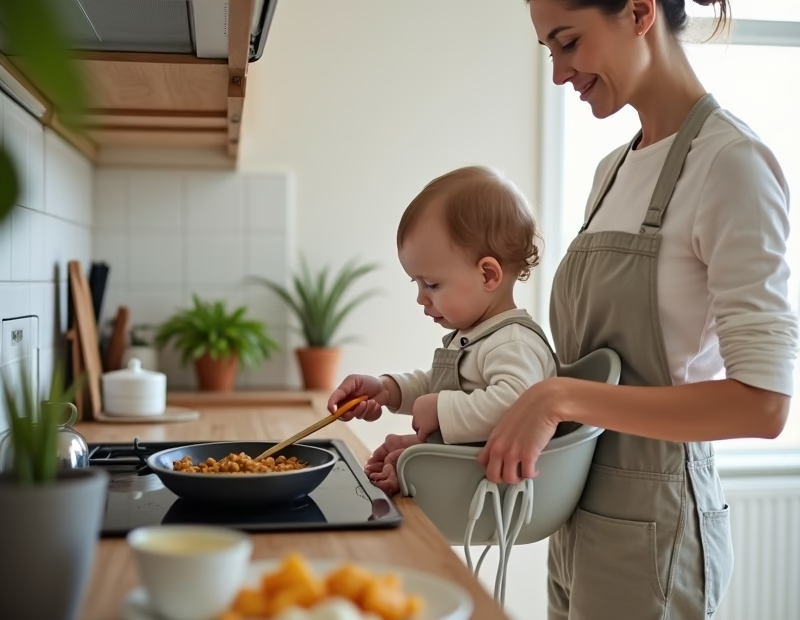
For kitchen safety with children in the first year, the most helpful approach is to combine clear parent boundaries with a simple setup: keep baby out of the cooking zone, store hazards high and locked, use a safe spot for baby nearby, and build small daily habits like turning pan handles inward and keeping hot drinks well back from edges.
Why boundaries matter in the kitchen
Babies do not need to understand kitchen rules for boundaries to help. In the first year, safety mostly comes from the environment you create and the habits you repeat. A boundary can be as simple as “baby stays in the high chair while I make lunch” or “the floor near the cooker is always an adult-only zone.”
That kind of consistency matters because kitchens change quickly. One minute the room feels calm, and the next there is an open dishwasher, a mug of tea on the counter edge, and a hot pan on the hob. When parents have a few default rules, it is easier to make safe choices even during busy moments.
If you are reviewing your wider home safety setup, the Health & Safety section can be a useful place to explore related guidance.
1. Create a clear no-baby cooking zone
One of the most effective ideas for kitchen safety with children is to define the area near the oven, hob, and food prep space as an adult-only zone. For a young baby, that usually means they are not on the floor near your feet while you cook.
It can help to picture an invisible boundary around:
- the cooker or hob
- the oven door
- the kettle area
- the sink when hot water is running
- the main chopping and prep surface
If your baby is already rolling, pivoting, or starting to crawl, this matters even more. Babies move into danger faster than many parents expect, especially when you are briefly distracted.
Helpful setup ideas
- Use a high chair, bouncer, or other safe supervised place away from heat and splashes while you cook.
- Place that safe spot where your baby can still see or hear you.
- Keep the route between your cooker, sink, and counter clear so you are not stepping around bags, toys, or pets.
2. Set up one safe place for baby before you start
Many kitchen accidents happen during transitions. You go to put water on, answer a message, or unload shopping, and suddenly your baby is in a less safe position than you intended. Choosing a safe default spot before you begin makes daily routines smoother.
Depending on your baby and the task, that safe place might be:
- a high chair secured away from hot surfaces
- a playpen outside the kitchen work zone
- a blanket or play mat in an adjacent room where you can still supervise closely
- another adult’s arms while you handle something hot or sharp
The best option is the one you can use consistently. You do not need a complicated rotation. A simple, repeatable routine is usually easier to maintain.
3. Keep hot items far back, every time
Heat is one of the biggest kitchen risks in the first year. Babies can grab tablecloths, reach for mug handles, pull on wires, or lunge unexpectedly while being held. Small habits make a big difference here.
Habits worth keeping
- Put hot drinks at the back of the counter, never near the edge.
- Avoid holding your baby while carrying hot food or drinks.
- Turn pan handles inward and away from the front of the cooker.
- Use the back rings on the hob when possible.
- Keep kettle cords and appliance cords tucked well out of reach.
- Do not leave hot soup, porridge, or bottles of warming water where they can be knocked.
If family members or visitors spend time in your kitchen, it helps to say these rules out loud. A calm reminder like “please keep hot drinks on the back counter” can prevent a rushed mistake.
4. Move sharp tools and breakables out of easy reach
Even before a baby can pull to stand, it is useful to think ahead. Kitchen drawers and low shelves often become more tempting month by month. Setting up safer storage early means you are not trying to redesign the room when your baby becomes suddenly mobile.
Store these items high up or securely locked:
- knives
- scissors
- graters and peelers
- glass dishes
- ceramic bowls stored on low shelves
- blender blades and food processor parts
It is also worth checking what sits near the edge of counters. A hanging tea towel, an apron string, or a loose bag handle can become something a baby tugs on.
5. Treat cleaning products like a top-priority hazard
Sprays, dishwasher tablets, washing-up liquid, descaler, and bin liners often live low down in the kitchen. For babies moving into crawling and pulling up, these can become accessible very quickly.
Safer setup ideas include:
- keeping cleaning products in a high cupboard if possible
- using cupboard locks on any low storage that contains harmful items
- never leaving products out while you step away, even briefly
- storing dishwasher tablets and refill packs fully out of sight and reach
- putting bin bags and small plastic items away securely
Try to avoid the habit of placing cleaning products on the floor “just for a minute” while you tidy. Those short moments are often when babies start exploring.
6. Watch the floor as closely as the counters
When parents think about kitchen safety with children, counters usually get most of the attention. But the floor brings its own risks. Spilled water, dropped food, small packaging pieces, pet bowls, and sharp crumbs from broken items can all create problems.
A quick floor check is especially helpful before putting a baby down. Look for:
- wet patches that could make you slip while carrying your baby
- small foods that may be a choking risk for an older baby
- dropped medication or vitamins from bags or coat pockets
- pieces of foil, plastic, twist ties, or elastic bands
- pet food or pet water bowls within reach
If your kitchen opens into the main family space, a gate or another physical boundary can help keep crawling babies out of the busiest area during cooking times.
7. Keep appliances unplugged and cords managed
Toasters, kettles, mixers, slow cookers, and bottle-prep devices can all add heat, cords, or leftover hot surfaces to the room. Try to avoid leaving appliances plugged in when not in use, especially if the cord hangs down or the item stays warm after use.
Useful habits include coiling cords out of sight, moving smaller appliances away from the front edge of counters, and unplugging devices as soon as you are finished with them. If an appliance has a damaged cord or feels unstable on the counter, it is best not to use it until it is repaired or replaced.
8. Build simple kitchen rules for adults, not just children
In the first year, babies rely on adults to keep the environment safe. That is why the most effective boundaries are often adult habits rather than child instructions.
You might choose a few house rules such as:
- No hot drinks while holding the baby.
- No baby on the floor during active cooking.
- No knives or cleaning products left out between tasks.
- No open oven or dishwasher left unattended.
These rules can be very reassuring because they reduce the number of decisions you need to make in the moment. They also help grandparents, babysitters, and older siblings understand what matters most in your kitchen.
9. Plan for busy moments and divided attention
Real family life is not perfectly calm. Babies cry, someone rings the bell, milk boils over, and you realise you forgot to take food out of the freezer. A safer kitchen setup accounts for that reality.
Before starting a task, ask yourself:
- Where will baby be for the next ten minutes?
- Is anything hot, sharp, or chemical within reach?
- Can I finish this job now, or should I wait until another adult is available?
If you feel rushed, choosing a cold meal, a simpler snack, or a one-handed task can be the safer option. There is nothing careless about adjusting the plan when your attention is already stretched.
10. Recheck your setup as your baby changes
A baby who could not reach yesterday may reach today. Development in the first year can feel sudden. Rolling becomes scooting, scooting becomes crawling, and pulling up may appear earlier than expected. That means kitchen safety with children is not a one-time checklist. It is something to revisit regularly.
A useful rhythm is to review the room every few weeks and after any new milestone. Get low to the ground and look around from your baby’s level. You may notice dangling cords, low cupboard contents, handles, bins, and cloths in a new way.
For more everyday parenting help with babies, you may also find the baby and toddler section useful.
11. Keep a short emergency plan in mind
No parent can remove every risk completely. What helps is knowing in advance what you would do if something went wrong. Keep emergency numbers easy to access, and make sure caregivers know where basic first aid supplies are kept. If a burn, poisoning concern, breathing problem, or serious injury happens, seek urgent medical help right away.
It can also be calming to keep one reliable baby-care reference at home. Some parents like an easy-to-dip-into guide such as Mayo Clinic Guide to Your Baby’s First Years as an optional everyday resource alongside advice from their own healthcare professionals.
Red flags: when extra caution is needed
Most parents are looking for practical prevention, not reasons to worry more. Still, there are moments when it makes sense to pause and take extra care.
Be especially careful if:
- you are holding your baby while handling hot food, boiling water, or a hot drink
- your baby has started rolling, crawling, or pulling up and your kitchen has not been rechecked recently
- cleaning products, medicines, sharp tools, or plastic bags are stored low down and unlocked
- you often cook while tired, rushed, or alone with a baby who wants to be held
- the floor is frequently slippery, cluttered, or shared with pets during meal prep
- visitors or older children sometimes leave mugs, cords, or small items within reach
If you already notice one or more of these issues, there is no need for guilt. Start with the highest-risk area and make one change today. Small improvements count.
A calm checklist you can use today
- Choose one safe place for baby before starting kitchen tasks.
- Make the cooker and prep area an adult-only zone.
- Move hot drinks and pans to the back.
- Turn handles inward and tuck cords away.
- Store knives, glass, and cleaning products high or locked.
- Check the floor before putting baby down.
- Review the room again after each new movement milestone.
If you like simple routines and checklists, you can explore the tools and printables section for practical family resources. You can also visit the main site for more everyday parenting guides.
If you want a simple next step, take a look at the tools and printables section for practical family resources you can use to organise safer daily routines at home.
FAQ
When should I start thinking about kitchen safety with children?
It is worth starting early, even in the newborn stage. Babies develop quickly, and setting up safer habits before rolling or crawling begins can make daily routines much easier.
Is it safe to hold my baby while cooking?
It is safest to avoid holding your baby while handling hot food, hot drinks, sharp tools, or opening the oven. A nearby safe place for your baby is usually the better option during active cooking.
Do I need cupboard locks for a baby under 1 year?
Not every cupboard needs a lock, but any low cupboard containing cleaning products, sharp tools, glass, or other hazards should be secured before your baby becomes mobile.
What is the biggest kitchen risk for babies?
There is not just one risk, but hot drinks, pans, boiling water, cleaning products, and sharp items are some of the most important hazards to manage in the first year.
Should my baby be on the kitchen floor while I cook?
In most cases, it is safer to keep your baby out of the cooking zone. A high chair, playpen, or supervised safe spot away from heat and foot traffic is usually a better choice.
What if I cannot childproof the whole kitchen at once?
Start with the highest-risk areas first: heat, sharp objects, chemicals, cords, and slippery floors. You do not need to do everything in one day for your changes to be helpful.
Kitchen safety with children does not need to mean a perfectly controlled home. For babies in the first year, the most effective steps are usually simple ones: a safe place for baby, a clear no-go cooking zone, and steady adult habits around heat, cords, sharp items, and cleaning products.
If your kitchen feels a bit chaotic right now, start small and adjust as your baby grows. Thoughtful boundaries and a calmer setup can make kitchen safety with children feel much more manageable day by day.
This article is for general information and does not replace medical or safety advice for your specific situation. If your baby has had a burn, possible poisoning, trouble breathing, or another urgent injury, seek immediate professional help.