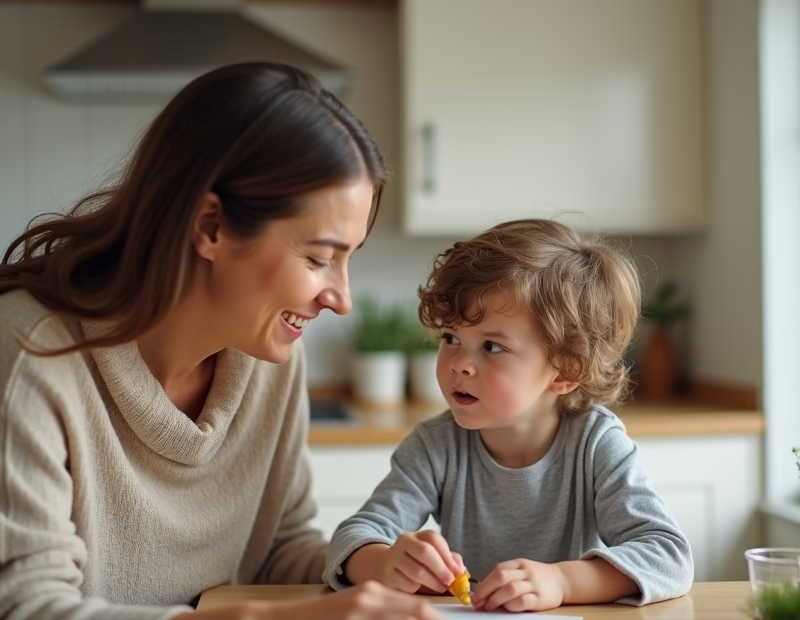
Teaching empathy to kids can start with small daily habits such as naming feelings, listening without rushing, noticing how actions affect others, and encouraging simple acts of help, repair, and kindness at home.
Why daily habits matter
Empathy grows best through practice. Children do not usually learn it from one serious conversation. They learn it by watching how adults respond, by hearing feelings named clearly, and by getting many chances to pause and think about another person’s experience.
For children aged 8 to 10, this is a very useful stage. They can begin to understand that people may feel differently in the same situation. They can also think more clearly about fairness, friendship, and the effect of their words. That makes everyday routines a powerful place for teaching empathy to kids.
If you want a broader look at this stage, you may also find the child development section helpful for related parenting topics.
What empathy looks like at ages 8 to 10
At this age, empathy may sound and look quite simple. Your child might:
- notice when a sibling is upset
- ask why a friend was left out
- realise a joke hurt someone’s feelings
- offer help without being told
- change their behaviour after understanding its effect
Empathy does not mean your child will always be patient, generous, or calm. Even caring children can be impulsive, defensive, or self-focused when tired, frustrated, or embarrassed. The goal is not perfection. The goal is helping your child slowly build the habit of noticing, understanding, and responding with care.
1. Start with a daily feelings check-in
A short feelings check-in helps children become more aware of emotions in themselves and others. This does not need to be long or formal. You can do it in the car, at dinner, or before bed.
Try simple prompts
- What was one good part of your day?
- What felt hard today?
- Did you notice anyone else having a tough time?
- How do you think your friend felt then?
If your child says, “I don’t know,” keep it light. You might say, “That’s okay. Want help thinking it through?” Over time, regular check-ins make feelings easier to notice and talk about.
Why this helps
Children who can recognise feelings are often better able to respond kindly. Naming emotions gives them language for what they see, and that supports teaching empathy to kids in a very practical way.
2. Model calm listening at home
Children learn empathy by experiencing it. When you listen without interrupting, mocking, or rushing to fix everything, you show them what respectful attention looks like.
This does not mean agreeing with every complaint. It means making space for the feeling before moving to solutions.
What this can sound like
- “You seem disappointed.”
- “I can see why that felt unfair.”
- “Tell me what happened from your side.”
- “Let’s think about how the other child may have seen it too.”
When children feel heard, they are often more willing to consider someone else’s point of view. Listening first makes later teaching more effective.
3. Use everyday conflicts as empathy practice
Arguments between siblings, friendship problems, and playground misunderstandings can be frustrating, but they also give children a chance to practise perspective-taking.
Instead of deciding too quickly who was right, guide your child through a few empathy-building questions.
Helpful questions to ask
- What happened?
- How were you feeling at the time?
- How do you think the other person felt?
- What part do you think was hardest for them?
- What could help repair it now?
This approach helps children move beyond blame. They learn that behaviour affects real people, and that repair matters.
Example
If your child says, “My brother is so annoying,” you might respond, “You sound really irritated. What happened? And how do you think he felt when you shouted at him?” This keeps the conversation grounded in both accountability and understanding.
4. Notice and praise caring behaviour specifically
General praise like “good job” is fine, but specific feedback helps children understand what empathy looks like in action.
Try saying
- “You noticed your sister was nervous and sat with her. That was thoughtful.”
- “You gave your friend time to explain. That was kind.”
- “You saw Grandma needed help carrying that bag.”
Specific praise helps children connect their actions with the effect they had on someone else. It also shows that empathy is not only about feelings. It is about what we do with what we notice.
5. Build one small habit of helping every day
Empathy becomes stronger when it leads to action. Encourage one simple daily habit that helps another person in the family.
This could be:
- filling a sibling’s water bottle
- checking whether someone wants help with a task
- setting the table without being asked
- writing a quick note for a family member
- making space for someone else to talk
Keep it manageable. The aim is not to turn your child into the household helper. The point is to help them get used to noticing needs around them.
6. Read, watch, and talk about characters’ feelings
Stories are a gentle way to build empathy because they let children step into someone else’s experience without pressure. After reading a book or watching a show together, ask a few thoughtful questions.
Useful prompts
- Why do you think that character reacted that way?
- What do you think they were worried about?
- Who was misunderstood?
- What would have helped in that moment?
You do not need a school-style discussion. Even one or two short questions can help your child practise perspective-taking.
If you want more ideas for home-based learning, you can browse learning activities for simple ways to turn ordinary moments into meaningful conversations.
7. Teach the pause before reacting
Empathy is much harder when a child is flooded with anger, embarrassment, or frustration. One of the most useful habits is learning to pause before speaking or acting.
Simple steps to practise
- Stop your body
- Take one breath
- Name the feeling
- Think: what is happening for the other person too?
- Choose a next step
You can practise this outside conflict, when everyone is calm. Some families keep a short reminder on the fridge or use a printable cue card. If that would help your child, you could explore the tools and printables section for simple supports you can use at home.
8. Make repair a normal part of family life
Empathy is not only about avoiding mistakes. It is also about what happens after someone gets hurt. Children need practice in making repair without shame or long lectures.
Teach a simple repair pattern
- Say what happened
- Name the effect
- Offer a sincere apology
- Ask what could help now
- Try to do better next time
For example: “I grabbed the game from you. That was rude and made you upset. I’m sorry. Do you want it back now, or do you want a turn timer?”
This teaches responsibility while keeping the focus on relationships, not punishment alone.
9. Encourage curiosity instead of quick judgement
Children often jump to conclusions: “She’s mean,” “He did it on purpose,” or “Nobody likes me.” A gentle habit of curiosity can soften these reactions.
Try guiding your child away from instant judgement and toward questions such as:
- What else could be going on?
- Could there be another explanation?
- What information are we missing?
This does not mean excusing unkind behaviour. It simply teaches children that people’s actions often have more than one possible meaning, and understanding comes from slowing down.
10. Involve your child in simple family decisions
Empathy grows when children see that everyone’s needs matter. Small family decisions are a good place to practise this. You might ask:
- How can we plan the afternoon so everyone gets some time they enjoy?
- What would make this visit easier for your younger sibling?
- How can we help Dad rest if he has had a hard day?
These conversations help children think beyond themselves in a real and practical way.
11. Keep expectations realistic
Some children are naturally more expressive, while others are quieter or slower to talk about feelings. Some will show empathy through words; others through actions. Your child does not need to become deeply emotional to become more considerate.
Also remember that children may show empathy unevenly. They might be wonderfully kind to a pet but impatient with a sibling. That is normal. Skills often appear in one context before another.
Consistency matters more than intensity. Brief, repeated practice usually works better than heavy discussions.
Common mistakes that can get in the way
Turning empathy into a lecture
If every conflict becomes a long speech, children may tune out. Short, calm guidance usually works better.
Forcing apologies too quickly
A rushed “say sorry” can become empty. It helps to slow down, understand what happened, and then guide real repair.
Expecting your child to manage everyone else’s feelings
Empathy is about care and awareness, not over-responsibility. Children should not feel they must keep everyone happy all the time.
Ignoring your own example
The way adults handle stress, disagreement, and mistakes teaches a great deal. Saying, “I was snappy earlier. I’m sorry. You didn’t deserve that,” is a strong empathy lesson.
A simple daily rhythm you can copy
If you want an easy place to start, try this gentle routine:
- Morning: ask one caring question such as “Is there anyone at school who might need kindness today?”
- After school: do a two-minute feelings check-in
- During conflict: pause, name feelings, and ask about the other person’s point of view
- Evening: notice one caring thing your child did or saw
This kind of rhythm keeps empathy present without making it feel heavy.
An optional resource for parents
If you like having a trusted parenting book at home for everyday guidance, some parents find the Mayo Clinic Guide to Your Baby’s First Years a helpful general resource. It is not specific to empathy for this age group, but it can still be a useful parent-friendly reference for family life and early development.
What matters most
Teaching empathy to kids is usually less about finding the perfect script and more about building a family culture where feelings are noticed, people are listened to, and repair is normal. Small habits done often can shape how your child treats others over time.
You do not need to do everything at once. Choose one habit, practise it for a week or two, and let it become part of daily life.
If you want a simple next step, explore the tools and printables section for family-friendly supports you can use during check-ins, calming pauses, and repair conversations at home.
FAQ
At what age can children really start learning empathy?
Children begin showing early empathy when they are young, but ages 8 to 10 are a great time to strengthen it. At this stage, many children can better understand different points of view and think about how their actions affect others.
What is the difference between empathy and kindness?
Empathy is understanding or noticing another person’s feelings and experience. Kindness is the action that may follow. A child can learn to pause, understand, and then choose a kind response.
What if my child seems uninterested in other people’s feelings?
That does not always mean a child lacks empathy. They may be distracted, tired, frustrated, or less expressive by nature. Keep practising small habits such as naming feelings, asking gentle questions, and modelling caring behaviour.
Should I make my child apologise when they hurt someone?
It is usually better to guide a meaningful apology than to demand one immediately. Help your child understand what happened, how the other person may have felt, and what repair would look like.
Can sibling arguments help build empathy?
Yes. Sibling conflict can be a useful chance to practise listening, perspective-taking, and repair. Calm guidance after the moment often works better than trying to solve everything in the middle of the argument.
How long does it take to build empathy habits?
It usually happens gradually. Small daily routines tend to be more effective than occasional big talks. Over time, repeated practice can help empathy feel more natural and consistent.
Teaching empathy to kids does not need to be complicated. A few steady habits, such as listening well, naming feelings, and helping children make repair, can gently shape how they respond to others each day.
Start small and stay consistent. When empathy becomes part of ordinary family life, children have more chances to practise it in ways that feel real, manageable, and lasting.
None