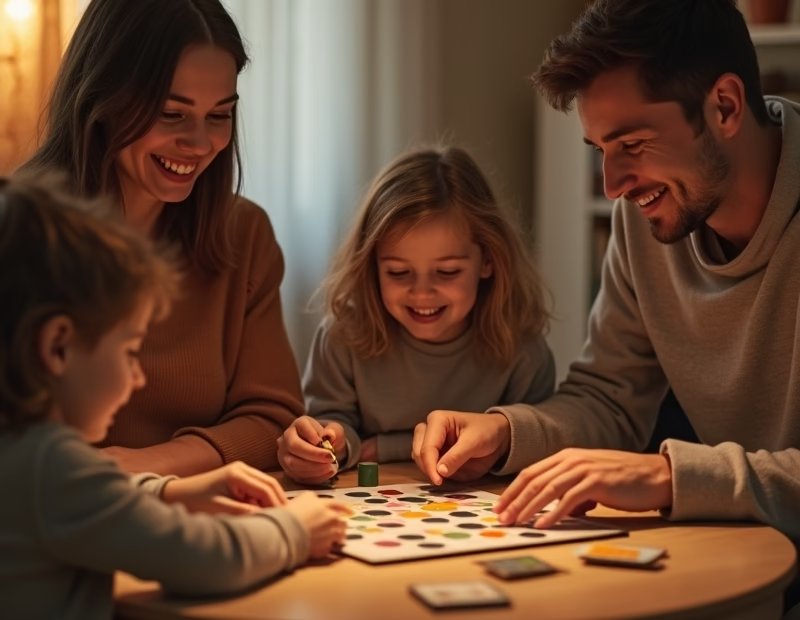
The best family game night ideas for mixed ages are simple games with short turns, clear goals, and flexible rules, such as charades, bingo, scavenger hunts, picture bingo, category games, and cooperative board games. These keep younger children involved while still giving older kids and adults enough to enjoy.
What makes a game work for mixed ages?
When you have children of different ages playing together, the goal is not to make everything perfectly equal. The goal is to make it enjoyable enough that everyone can stay involved. The games that work best usually have a few things in common:
- Short turns, so younger children do not lose attention
- Simple rules, so adults are not constantly explaining
- Some room for luck, so older players do not always dominate
- Flexible difficulty, so you can quietly help younger children without stopping the game
- A light mood, where the fun matters more than the score
If family games often end in tears or arguments, it helps to choose games that focus more on participation than competition. You can also find more simple play ideas in our Learning & Activities section.
1. Charades with easy family themes
Charades is one of the easiest family game night ideas because you can make it as simple or as silly as needed. Younger children can act out animals, bedtime routines, favourite foods, or familiar story characters. Older children can take on harder ideas such as films, jobs, emotions, or actions with more detail.
Why it works
- No reading is needed if an adult reads the card
- You can make prompts easier or harder for each player
- Everyone can play together in teams
How to make it easier for ages 5 to 7
Use picture cards or whisper the prompt to the child. Keep rounds short and celebrate effort, not just correct guesses.
Try this tonight
Write simple prompts on slips of paper: cat, brushing teeth, making a sandwich, sleepy, dinosaur, rainy day, swimming, giant, whispering.
2. Scavenger hunts around the house
A scavenger hunt works well when children have different strengths. Younger ones can find big, obvious items, while older children can solve clues or look for objects with specific colours, shapes, or uses.
Why it works
- Children can move, which helps if sitting still feels hard
- You can give each child a different level of challenge
- Siblings can work as a team instead of against each other
Easy mixed-age versions
- Colour hunt: find something red, blue, soft, round, shiny
- Room hunt: find one object from the kitchen, bedroom, bathroom, and hallway
- Clue hunt: older children read clues, younger children help search
If your child enjoys printable activities, you can explore more ideas in the tools and printables section for simple family use.
3. Bingo with pictures or family themes
Bingo is reliable for mixed ages because the rules stay the same even when the content changes. For younger children, use picture bingo with animals, foods, shapes, or toys. For older children, switch to words, numbers, categories, or themed bingo such as seasons or nature.
Why it works
- Very little waiting between turns
- Younger children can match pictures even if reading is still developing
- Older players can play a more advanced version at the same table
Practical tip
Use counters, buttons, or small paper scraps for markers. Keep prizes unnecessary. The game itself is enough for most family evenings.
4. Category games with simple prompts
Category games are great for stretching thinking without making it feel like school. Say a category and take turns naming something that fits.
Good starter categories include animals, things in a lunchbox, things you wear, things at the park, foods that are yellow, and things that make noise.
Why it works
- You can adapt the category to the children playing
- Younger children can give simple answers
- Older children can try harder categories or harder starting letters
Mixed-age fix
If one child gets stuck, allow helpers. You can also play in pairs, with an older child and younger child working together.
This kind of turn-taking play can support listening, memory, and confidence. If you want more background on how children grow through everyday play, our child development articles may be useful.
5. Cooperative board games
Not every family game night needs a winner and loser. Cooperative games let everyone work toward the same goal, which can reduce arguments and stop one child from feeling blamed for losing.
Why it works
- Children help each other instead of competing
- You can guide younger players without making it obvious
- The whole mood often feels calmer
What to look for
Choose games with simple instructions, visible goals, and short play times. If a game takes too long to set up or explain, mixed-age groups often lose interest before the fun begins.
If you want one optional ready-made choice, Herd Mentality Family Game can suit families who enjoy light, funny group play and easy conversation. It tends to work best when adults keep the mood relaxed and help younger children join in without pressure.
6. Simon Says and listening games
Classic listening games still work well because they are easy to start and need almost no equipment. Simon Says, Follow the Leader, and simple movement-copying games are especially useful when children have different ages and energy levels.
Why it works
- Very low prep
- Children can join immediately
- You can make actions easier or harder in the moment
Examples
- Simon says touch your toes
- Simon says hop three times
- Simon says move like a crab
- Touch something wooden
These games are also helpful for families who want short play moments before dinner, after school, or during a rainy afternoon.
7. Pictionary or draw-and-guess games
Drawing games can work surprisingly well for mixed ages because artistic skill matters less than people expect. In fact, silly drawings often make the game more fun.
Why it works
- Younger children can draw simple objects
- Older players can try more detailed ideas
- Everyone gets a laugh out of imperfect drawings
Easy prompt ideas
Dog, sun, birthday cake, bus, treehouse, shoe, kite, fish, snowman, sandwich.
Keep it moving
Use a timer for one minute or less. Long turns can drag, especially for children around ages 5 to 7.
8. Build-a-story games
This is a simple spoken game where one person starts a story and each player adds one sentence. It works well at the table, on the sofa, or even during a car ride.
Why it works
- No materials needed
- Younger children can add short, funny details
- Older children can shape the plot and remember what happened
How to start
Use easy openings such as:
- One day, a penguin rang our doorbell…
- At the park, we found a map under the bench…
- Our cat suddenly learned how to bake…
If a child feels shy, let them choose a character or sound effect instead of a full sentence.
9. Matching and memory games with a twist
Memory games can be adapted for almost any age. Younger children can match identical picture cards. Older players can match word and picture pairs, related objects, or cards that belong in the same category.
Why it works
- Simple rules
- Easy to adjust by changing the number of cards
- Short rounds make it manageable
Mixed-age tip
Use fewer cards for the youngest player or let younger children take a turn with gentle help from an older sibling. Another easy option is team play, which keeps the mood kinder.
10. Dice games with very simple maths or movement
A single die can create a quick game with almost no setup. Roll and do the matching action, collect points, or complete a mini challenge.
Ideas to try
- Roll a number and do that many jumps
- Roll and build a tower with that many blocks
- Roll and colour that many spaces on a page
- Roll and say that many animals
Why it works
- Fast to explain
- Easy to repeat
- Children can play at their own level
These are especially good family game night ideas when you do not have the energy for a full board game but still want a shared activity.
11. Guess the object
Place a household object in a bag and let players feel it without looking. They can ask simple yes-or-no questions or just make a guess based on shape and texture.
Why it works
- Creates curiosity quickly
- You already have what you need at home
- Different ages can join without much explanation
Good items to use
Spoon, toy car, sock, hairbrush, block, orange, pencil, small ball.
For younger children, choose familiar objects and keep the pace light. For older children, use trickier items or allow a question round before guessing.
12. Simple relay and team challenge games
If your family has space to move, relay games can be a better fit than sitting games. Mixed-age children often manage these well when the tasks are silly and short.
Ideas
- Carry a soft toy across the room without dropping it
- Balance a beanbag on your head
- Hop to a chair and back
- Move three blocks from one basket to another
Why it works
Children who struggle with waiting often do better when there is movement. Team relays can also stop older children from leaving younger ones behind, since they are all aiming for the same finish together.
How to make family game night smoother
Even the best game can go wrong if everyone is tired, hungry, or expecting too much. A few simple choices can make mixed-age play feel much easier.
Keep it short
It is better to stop while everyone is still happy than to push through one more round. Twenty minutes can be plenty.
Choose one lead adult if needed
One parent guiding the rules and pace can reduce confusion, especially with younger children.
Mix active and calm games
Start with movement, then switch to a table game, or do the reverse depending on your children’s energy.
Adjust without announcing it
Quietly make things easier for younger children. Give simpler prompts, allow extra thinking time, or pair them with an older player.
End with success
If the mood is dipping, finish with a guaranteed favourite. Children often remember the ending most clearly.
A simple mixed-age game night plan
If you want a ready-made routine, try this:
- Start: 5 minutes of Simon Says or Follow the Leader
- Middle: 10 minutes of charades or bingo
- Finish: 5 to 10 minutes of a cooperative or story game
This kind of rhythm works well for ages 5 to 7 because it keeps the evening moving and avoids long stretches of sitting, waiting, or listening to rules.
The best family game night ideas are often the ones you can repeat easily. If a game is simple enough to pull out on an ordinary evening, it is far more likely to become a happy family habit.
If you want an easy next step, have a look at our tools and printables page for simple activities you can use at home without much preparation.
FAQ
What is the best type of game for children of different ages?
The best games for different ages usually have simple rules, short turns, and flexible difficulty. Cooperative games, charades, bingo, scavenger hunts, and guessing games often work well.
How long should family game night be for ages 5 to 7?
For many children this age, 15 to 30 minutes is enough. You can always stop after one game while everyone is still enjoying it.
How do I stop older children from taking over?
Choose games with turn-taking, team play, or some luck involved. It also helps to give older children a helpful role, such as teammate, clue reader, or encourager, instead of letting them control the whole game.
What if my younger child cannot follow the rules yet?
Simplify the rules, model each turn, and keep the game going instead of correcting every mistake. Many mixed-age games work better when adults quietly adapt them as needed.
Do board games or no-prep games work better for mixed ages?
Both can work, but no-prep games are often easier on busy evenings. Board games can be great when the rules are simple and the play time is not too long.
Can family game night still work if siblings argue a lot?
Yes, but it helps to choose cooperative games, short rounds, and low-pressure play. Start with one easy success instead of a long or highly competitive game.
The most useful family game night ideas for mixed ages are the ones that feel easy to start, easy to adjust, and enjoyable for everyone at the table. You do not need a perfect setup. A few simple games, a flexible attitude, and a short time together can go a long way.
If a game keeps younger children involved and older ones interested, it is already doing its job. Start small, notice what your family enjoys, and build from there.
None