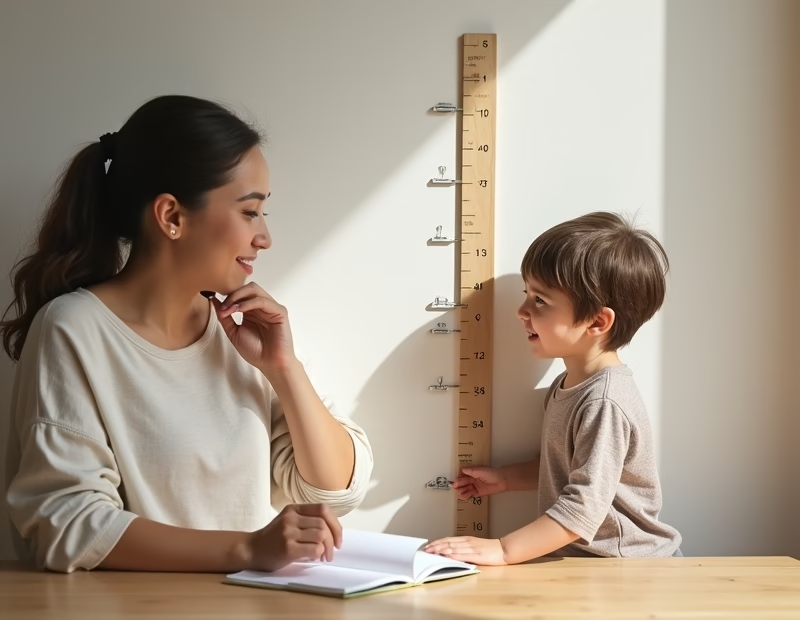
Parents can use growth data well by tracking occasionally, looking for patterns over time instead of day-to-day changes, and treating a child growth tracker guide as a calm record rather than a scorecard. If you want a simple starting point, try the child growth tracker tool to keep measurements in one place.
Why growth data feels helpful and stressful at the same time
Many parents like having something concrete to look at. Height, weight, clothing size changes, and how a child seems to be growing can feel easier to follow than other parts of development. At the same time, numbers can create pressure. A single measurement taken at home can look more important than it really is, especially when your child is growing in their own way.
A calm approach helps. Growth data is most useful when it gives you a broad picture over time. It becomes less useful when it turns into frequent checking, worry after every small change, or comparison with siblings, friends, or children online.
If you usually like practical tools, the resources in Tools & Printables can help you keep information organized without making it the center of family life.
What growth tracking is actually for
A child growth tracker guide works best when parents use it for simple, sensible reasons:
- to keep measurements together in one place
- to notice gradual patterns over time
- to remember questions for routine checkups
- to spot changes that may be worth discussing with a health professional
- to reduce the stress of trying to remember everything
It is not meant to prove that you are doing parenting “right.” It is also not meant to predict every stage of your child’s future growth.
How often parents really need to track
One of the easiest ways to avoid obsessing is to make tracking less frequent. Many families do better with a light routine than with constant updates.
A simple rhythm most parents can use
- Babies: note measurements from routine appointments and only add home notes if there is a practical reason
- Toddlers: update every few months or when a clear change matters, such as clothing sizes or a checkup
- Preschoolers and older children: track occasionally, not weekly, unless a clinician has asked you to monitor something more closely
This kind of schedule keeps growth data useful. It also lowers the chance that normal little variations start to feel alarming.
When home measuring makes sense
Home tracking can be helpful when you are:
- updating a family health record
- checking whether clothes or shoes need replacing
- preparing for an appointment
- keeping track of a general pattern over a longer period
It makes less sense to measure just because you feel worried in the moment. If anxiety is driving the process, it usually does not make the information clearer.
What to look for instead of tiny changes
Parents often feel pulled toward exact numbers. In real life, broader patterns are usually more helpful than tiny shifts.
Focus on trends, not one-off measurements
A single number can be affected by time of day, whether your child just ate, differences between scales, posture, and simple measuring error. A pattern over months matters more than one reading from one day.
Helpful questions include:
- Does growth seem generally steady over time?
- Have clothes and shoes been changing in a fairly expected way?
- Does your child seem well, active, and themselves?
- Is there a gradual change you want to remember to ask about later?
These questions keep growth data connected to real family life instead of turning it into a list of numbers without context.
Notice the whole child
Growth never exists on its own. Appetite, sleep, energy, mood, illnesses, activity level, puberty, and family growth patterns can all affect what you notice. A child who has needed more rest after an illness may look different for a while than they did a few weeks earlier. That does not automatically mean something is wrong.
This is why a practical child growth tracker guide should support observation, not replace it.
How to use a child growth tracker guide without spiraling
The key is to decide in advance how you will use the information. A few simple rules can stop growth tracking from taking over your thinking.
1. Choose one place to keep records
Use one notebook, printable, or digital tracker instead of scraps of paper and phone notes. When information is scattered, parents tend to recheck more often because they do not trust what they already recorded.
You can use the child growth tracker to keep basic measurements in one calm, consistent place.
2. Decide your tracking schedule in advance
Pick a realistic interval and stick to it. For example, you might update after routine appointments or once every two to three months. This helps prevent stress-based checking.
3. Record context, not just numbers
Write down simple notes such as:
- “Routine well visit”
- “Measured at home before buying new clothes”
- “Recovering from a recent illness”
- “Big appetite increase this month”
Context can make later patterns easier to understand.
4. Avoid comparing children
Siblings may grow differently. Friends’ children may grow differently. Even the same child can have periods of faster and slower growth. Comparison usually increases worry without giving useful action.
5. Save questions for appointments unless something clearly needs earlier advice
If you notice something you want to ask about, write it down instead of searching and measuring repeatedly. A simple note like “Ask about slower height change since last visit” is often enough.
Practical examples parents can copy today
Example 1: The baby record approach
You have a baby and want to keep track of growth without checking every week. Instead of weighing or measuring at home often, you record the measurements from routine visits and add one short note about feeding or sleep changes. That gives you a useful record without turning normal growth into a daily concern.
Example 2: The toddler clothing approach
Your toddler suddenly seems to outgrow trousers every few months. You note height from a routine checkup, write down the new clothing size, and leave it at that. You do not need to keep measuring in between unless there is a practical reason.
Example 3: The school-age pattern approach
Your older child has had a year with several illnesses, and you want to remember how things looked over time. You add occasional measurements and a short note about timing. At the next appointment, you have a clear summary if you want to ask a question.
Example 4: The worried parent reset
If you have fallen into frequent checking, pause and reset the system. Put away the scale or tape measure for a while. Keep one tracker, choose your next update date, and do not measure again before then unless a professional has advised it. That simple boundary often lowers stress quickly.
Signs that tracking may be becoming too much
Growth tracking is supposed to support you. It may be time to simplify if you notice any of these patterns:
- you measure repeatedly after small worries
- you feel upset by tiny differences between measurements
- you compare your child often with other children
- you spend more time tracking than observing how your child actually seems
- numbers affect your mood for the rest of the day
When this happens, scaling back is a healthy step. More data is not always more helpful.
How to bring growth questions to a routine appointment
You do not need a perfect record. A short, clear summary is enough. Try bringing:
- the dates of a few measurements
- notes about any recent illnesses or big routine changes
- one or two specific questions
Examples of useful questions:
- “Does this overall pattern look typical for my child?”
- “Is there anything here you would want us to keep an eye on?”
- “How often would you recommend tracking at home, if at all?”
This keeps the conversation practical and grounded.
What not to expect from a growth tracker
A tracker can help you organize information. It cannot tell you everything. It cannot replace professional assessment, and it cannot explain every short-term change. It is simply a record. That is useful enough.
Parents sometimes feel disappointed when a tool does not give certainty. But certainty is not really the goal. The goal is to keep a calm overview, reduce mental clutter, and make it easier to notice when a question is worth asking.
Useful tools and resources that support a calmer approach
If you want a simple place to start, the child growth tracker can help you record measurements without overcomplicating the process. You can also explore more family-friendly resources at Zadjecu if you are building a practical home system for routines, records, and everyday parenting.
If you like having one reassuring reference book at home, Mayo Clinic Guide to Your Baby’s First Years can be a helpful optional resource for parents of babies who want a broad, readable overview alongside routine care. It is not essential, but some families find it useful to have one trusted book to dip into.
A simple mindset shift that helps most
Instead of asking, “How can I track more accurately?” try asking, “How can I make this information more useful and less emotionally loaded?” That shift changes everything.
For most families, useful growth tracking looks like this: occasional updates, one place to store them, a few short notes, and no pressure to interpret every little change. Calm systems usually serve parents better than detailed ones.
If you want a simple next step, read the related guide and try the child growth tracker tool so you can keep measurements in one place without overchecking.
FAQ
How often should I measure my child at home?
Usually only occasionally. For many families, recording measurements from routine appointments and adding home updates every few months is enough. More frequent measuring is not always more helpful unless a health professional has asked you to track more closely.
Is it normal for growth to seem uneven?
Yes, growth can look uneven over short periods. Children often grow in spurts, and small differences between measurements can happen for simple practical reasons such as timing, clothing, posture, or different scales.
What should I write in a growth tracker besides height and weight?
Keep it simple. You can include the date, where the measurement came from, and a brief note such as a routine checkup, recent illness, appetite changes, or a clothing size change. Short context notes can be more useful than lots of extra detail.
Can a child growth tracker guide replace medical advice?
No. A tracker is just a record to help you notice patterns and remember questions. It does not replace routine care or professional advice when you have concerns about your child’s growth or health.
How do I stop myself from obsessing over growth data?
Choose one place to record information, set a tracking schedule in advance, and avoid checking in between unless there is a clear reason. It also helps to focus on long-term patterns rather than day-to-day changes.
What if I notice something that worries me?
Write down what you noticed and, if needed, contact your child’s health professional for guidance. If the concern is not urgent, bring your notes to the next routine appointment so you can discuss the overall pattern calmly and clearly.
A good child growth tracker guide should help you feel steadier, not more tense. When you track occasionally, look for patterns over time, and keep notes in one simple place, growth data becomes a practical tool instead of a source of constant stress.
If you want to keep things easy, read the related guide and try the child growth tracker tool as a calm way to record what matters and leave the rest alone.
This article is for general informational purposes and is not a substitute for medical advice. If you have concerns about your child’s growth, feeding, or overall health, contact your child’s health professional.