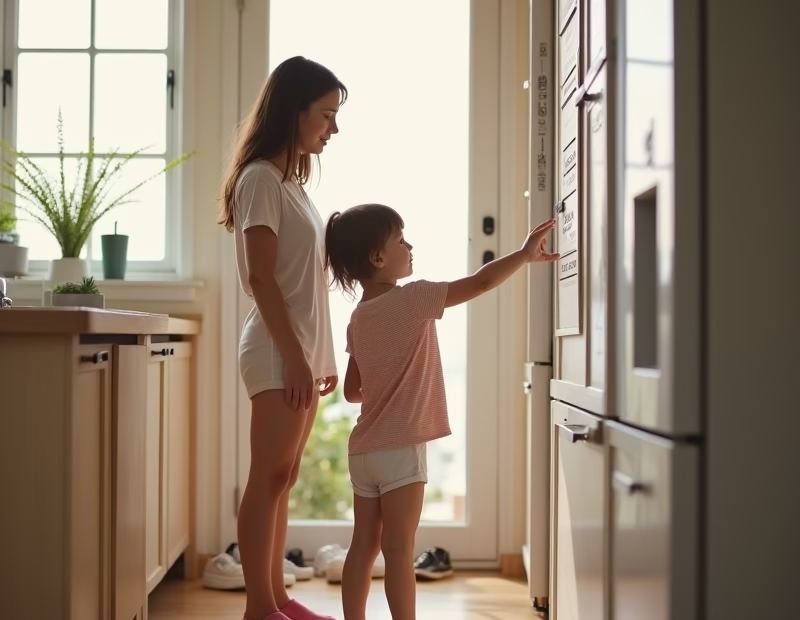
Visual routines reduce chaos because they make expectations clear, lower the number of verbal reminders, and help children move from one task to the next with more confidence. A simple morning routine printable can make busy times feel more predictable for both parents and children.
Why visual routines work so well at home
Children often cope better when they can see what is expected. A spoken instruction disappears quickly, especially during busy parts of the day. A visual routine stays in front of them. It shows the order of tasks, reduces confusion, and helps children feel more secure about what happens next.
This is useful for all ages. Toddlers benefit from simple picture-based steps. Preschoolers often enjoy checking off tasks. School-age children can use a written or mixed picture-and-word routine to become more independent. Even older children may do better with a clear visual plan when mornings are busy or emotions are running high.
A visual routine also changes the parent’s role. Instead of repeating, “Get dressed,” “Brush your teeth,” and “Put on your shoes,” you can point to the routine and say, “What comes next?” That small shift often lowers tension because the routine becomes the guide, not the parent’s voice.
What chaos often looks like in the morning
Morning chaos is not always about behaviour. Often, it starts with overload. Children may be sleepy, hungry, distracted, or unsure how much time they have. Parents may be trying to manage breakfast, school items, dressing, and getting out the door at the same time.
Here are a few common patterns:
- Children forget the next step and wait for reminders.
- Parents repeat instructions more and more loudly.
- One small delay affects the whole household.
- Transitions become the hardest part of the morning.
- Adults assume children know the routine, but the child still needs support to follow it.
A visual routine does not make every morning perfect, but it can remove a lot of avoidable friction.
How a morning routine printable helps
A morning routine printable gives structure without needing constant explanation. It works best when it is simple, visible, and realistic for your family.
Instead of expecting a child to hold every step in mind, the routine acts as an external memory. That can be especially helpful when children are tired, distracted, or still learning to manage several tasks in a row.
Parents also benefit because the printable helps separate the routine from emotion. If a child stalls, you do not need to launch into a long lecture. You can calmly return to the checklist or picture strip and guide them back to the next task.
If you want a simple starting point, explore the printable resources in the Tools & Printables section. Sometimes a ready-made format makes it easier to begin than trying to build everything from scratch.
The biggest benefits of visual routines
1. They make expectations clear
Children are more likely to cooperate when they know exactly what needs to happen. “Get ready” is vague. “Toilet, get dressed, eat breakfast, brush teeth, shoes, bag” is much clearer.
2. They reduce verbal overload
Too many reminders can make children tune out. A visual guide lowers the amount of talking and helps important instructions land more clearly.
3. They support independence
When children can follow a sequence on their own, they start relying less on adult prompting. This builds confidence over time.
4. They make transitions easier
Many difficult moments happen between activities, not during them. A visual routine helps children move from one step to the next with less uncertainty.
5. They help parents stay calmer
When the routine is visible, parents are less likely to feel they must carry the whole process in their head. That can lower stress for everyone.
What to include in a morning routine
The best routine is not the most detailed one. It is the one your child can actually follow. Keep only the steps that matter for a smooth start to the day.
A simple morning routine might include:
- Wake up
- Use the toilet
- Get dressed
- Eat breakfast
- Brush teeth
- Wash face or brush hair
- Put on socks and shoes
- Pack bag or check essentials
- Leave home
For younger children, fewer steps often work better. For older children, you can add responsibilities such as filling a water bottle, checking homework, or tidying the breakfast space.
How to make a visual routine actually work
Keep it visible
Place the routine where the morning happens: on the fridge, near the bedroom door, or in the bathroom. A routine hidden in a drawer will not help much.
Use the right level of detail
A toddler might need one image for each step. A school-age child may only need a short written list. Match the format to your child’s age and current ability.
Practice when you are not rushed
Do not introduce a new system during your hardest morning of the week. Walk through it on a calmer day. Let your child learn how to use it before expecting independence.
Expect support at the beginning
A visual routine is a tool, not a switch. Most children need help learning how to use it. You may still need gentle prompts such as, “Check your routine,” or “What is next?”
Review and simplify
If your child keeps getting stuck at one step, the routine may be too long, too vague, or out of order. Adjust it. Practical routines evolve with real family life.
Examples by age
Toddlers and young preschoolers
Use large, clear pictures with just a few steps. Try:
- Potty
- Get dressed
- Breakfast
- Brush teeth
- Shoes
At this age, staying beside your child and turning the next step into a simple habit often works best.
Older preschoolers and early school-age children
These children can usually manage a longer sequence, especially if they enjoy ticking off tasks. Try adding a visual marker they can move from one step to the next.
Older children
They may prefer a cleaner checklist rather than picture cards. Keep it respectful and practical. A routine can feel supportive without feeling babyish.
How to reduce resistance
Some children resist routines because they hear them as control. Others resist because they feel overwhelmed. A few small changes can help:
- Involve your child in choosing the order or images.
- Use calm, brief reminders instead of long explanations.
- Build in enough time so the routine does not feel like a race.
- Notice progress: “You checked the chart and got dressed on your own.”
- Be realistic about mornings after poor sleep, illness, or big changes.
If one part of the routine always causes conflict, focus there first. For example, lay clothes out the night before, keep shoes in one place, or prep breakfast items in advance.
Simple changes that make visual routines even more effective
A routine works best when the environment supports it. You do not need a perfect home, but a few practical adjustments can make mornings easier:
- Keep the routine in the same place every day.
- Store frequently used items where children can reach them.
- Prepare school bags and clothes the night before.
- Use baskets, hooks, or trays for shoes, coats, and essentials.
- Limit unnecessary choices during busy times.
Visual routines are strongest when they are part of a wider rhythm. If your family is trying to build more predictable days overall, you may find more practical ideas on the Zadjecu home page and in the printable tools collection.
When a routine needs adjusting
If the routine is not helping, it does not mean the idea is wrong. It usually means something needs changing.
Ask yourself:
- Is the routine too long?
- Are the steps clear enough?
- Is it placed where my child can actually see it?
- Does my child need pictures instead of words?
- Am I expecting independence before the routine is familiar?
You can also look at timing. Some children need more space between waking and starting tasks. Others manage better when breakfast comes earlier, before dressing or teeth brushing. It is fine to adapt the order to fit your child’s real needs.
A calm example parents can copy today
If your mornings feel messy, start with this basic version:
- Wake up
- Toilet
- Get dressed
- Breakfast
- Brush teeth
- Shoes and coat
- Bag and out the door
Print it, add simple pictures if needed, and place it where your child can see it. For one week, use the same calm phrase each time: “Check your routine.” Avoid adding extra words unless your child truly needs help.
Many parents find that consistency matters more than style. The best chart is the one that gets used.
One optional resource for parents
If you want extra support in creating calmer, less reactive family routines, Raising Good Humans is a thoughtful optional read. It is not a routine guide on its own, but some parents find it helpful for building calmer habits around everyday parenting moments.
If you want to put this into practice right away, take a look at the tools and printables section for a simple routine resource you can use at home.
FAQ
At what age can children use a visual routine?
Children can benefit from visual routines from the toddler years onward. Younger children usually need simple pictures and adult support, while older children may prefer a short checklist.
What should I put on a morning routine printable?
Include only the steps your child needs for a smooth start to the day, such as getting dressed, eating breakfast, brushing teeth, putting on shoes, and packing a bag. Keep it realistic and easy to follow.
How many steps should a visual routine have?
Use as few steps as possible while still covering what matters. Younger children often do better with 3 to 5 steps, while older children can usually manage more.
What if my child ignores the routine chart?
This is common at first. Point back to the chart calmly, practice using it when you are not rushed, and check whether the routine is too long or unclear. Most children need time and repetition before a routine becomes familiar.
Can a morning routine printable help older children too?
Yes. Older children may not want cartoon-style visuals, but many still benefit from a clear checklist, especially on school mornings when time pressure is high.
Do visual routines help with bedtime as well?
They often do. The same idea can be used for bedtime, after-school tasks, or weekend responsibilities. The goal is the same: make the sequence clear and reduce the need for repeated reminders.
A visual routine will not remove every difficult morning, but it can make daily life much clearer and calmer. When children can see what comes next, they often need fewer reminders and feel more confident moving through the day.
If mornings tend to unravel in your home, try a simple morning routine printable and keep it easy at first. Small, steady changes are usually what bring the most lasting calm.
None