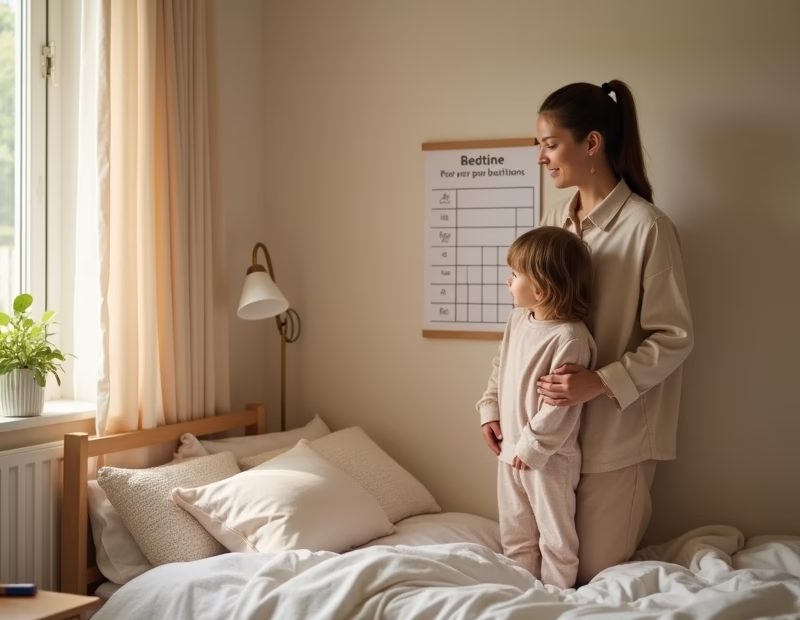
A bedtime routine chart helps by showing children the same simple steps every night, such as bath, pyjamas, teeth, story, cuddle, and sleep. The most helpful printables are clear, visual, and easy to follow, and you can pair them with the sleep schedule calculator to build a routine that fits your child’s day.
Why simple bedtime printables work
Bedtime often becomes hard when children are tired, parents are tired, and everyone is making decisions in the moment. A printable does not solve every bedtime struggle, but it can reduce confusion and make the routine feel more familiar.
A simple bedtime routine chart works well because it gives the evening a visible order. Instead of repeating instructions, you can point to the next step. Many children respond better when they can see what is happening rather than only hearing reminders.
This can help with:
- transitioning from play to rest
- reducing repeated bedtime reminders
- supporting independence
- making routines easier to follow across different caregivers
- keeping the evening calmer and more predictable
If you like practical family tools, you can also browse more options in the Tools & Printables section.
What to include in a bedtime routine chart
The most useful charts are short and realistic. If the routine has too many steps, children can lose interest and parents may stop using it. Aim for the steps that matter most in your home.
Common bedtime steps
- tidy up toys
- bath or wash face and hands
- put on pyjamas
- brush teeth
- use the toilet
- choose one book
- cuddle or quiet talk
- lights out
Not every family needs every step. For some children, a bath every night is helpful. For others, it may fit better on certain days. The chart should reflect your real routine, not an ideal one that is hard to keep.
Keep steps visible and simple
Use short phrases children can understand quickly. For younger children, pictures can help more than words. For older children, a checklist or plain written sequence is often enough.
For example:
- Pyjamas
- Teeth
- Toilet
- Book
- Bed
This kind of chart is easier to use than a long list with too much detail.
Types of bedtime printables that help most
Different families need different tools. You do not need to use every printable idea. Choose one or two that solve the problem you actually have.
1. Basic bedtime routine chart
This is the easiest place to start. It shows the routine in order and can be checked each night. It works well for toddlers, preschoolers, and many early primary school children.
Best for:
- children who need structure
- parents who want fewer bedtime reminders
- families building a new routine
2. Picture-based bedtime checklist
This version uses simple images for each step. It is especially useful for younger children or children who prefer visual support.
Best for:
- toddlers and preschoolers
- children learning routine language
- families who want a child-friendly chart
3. Tick-box bedtime checklist
A checklist feels more grown-up and can work nicely for school-age children. It gives them a sense of progress and ownership.
Best for:
- children who like completing tasks
- older siblings who want independence
- busy family evenings
4. Bedtime choice printable
This type of printable gives small choices within the routine, such as choosing between two pairs of pyjamas or selecting one of two books. This can reduce power struggles without changing the structure of bedtime.
Best for:
- children who resist being directed
- families working on cooperation
- preserving calm while allowing choice
5. Evening calm-down page
Some children need a gentle bridge between active play and sleep. A calm-down page might include stretching, deep breaths, a short story, soft music, or naming three quiet things from the day.
Best for:
- children who get silly or wired before bed
- children who struggle to switch off
- families wanting a gentler wind-down
How to make a bedtime routine chart actually usable
A bedtime printable is only helpful if it fits everyday family life. The goal is to make bedtime easier, not add another job.
Put it where the routine happens
Keep the chart at child height in a place your child will naturally see it, such as:
- the bathroom door
- the bedroom wall
- near the bookshelf
If the chart is tucked away in a drawer, it will not become part of the routine.
Use the same order each night
Predictability matters more than perfection. Even if the routine is short, try to keep the steps in the same order. This helps children know what to expect.
Keep the routine short enough to finish calmly
If bedtime always stretches too long, trim the routine. Children usually do better with a brief, repeatable sequence than a long one that changes from night to night.
A good starting point is 5 to 7 steps.
Let your child participate
Children are often more willing to follow a chart if they helped choose it. You can let them:
- pick the order from two reasonable options
- colour the printable
- place a tick or marker after each step
This makes the chart feel like a tool for them, not just a list from an adult.
Practical bedtime routine examples by age
There is no single bedtime routine chart that fits every age perfectly. Here are simple examples parents can copy and adjust.
For babies
Babies do not follow a chart independently, but a parent-facing printable can still help keep the routine calm and consistent.
- feed
- nappy change
- pyjamas
- quiet cuddle or song
- sleep
For babies, the chart is mostly for the caregiver. A steady sequence can make evenings feel easier to repeat.
For toddlers
- tidy toys
- bath or wash
- pyjamas
- brush teeth
- choose one book
- cuddle
- bed
Toddlers often benefit from pictures and very short wording. Too many steps can be overwhelming near the end of the day.
For preschoolers
- toilet
- wash hands and face
- pyjamas
- teeth
- two books
- hug and goodnight
- lights out
This age often responds well to simple independence, like turning over each card or checking each step off.
For school-age children
- pack school bag for tomorrow
- shower or wash
- pyjamas
- brush teeth
- quiet reading
- goodnight
- sleep
School-age children may like a more mature checklist style. Quiet reading can be a helpful final step if it feels calming rather than stimulating.
Common bedtime printable mistakes to avoid
Making the chart too long
A long bedtime list can make children feel as if bedtime never ends. Keep only the steps you really use.
Changing the routine every night
If the order changes often, the chart loses its value. Children usually do better when bedtime feels familiar.
Using the chart only when bedtime is already going badly
Try to introduce the chart during a calm moment, not in the middle of a difficult night. Practice using it together before expecting your child to follow it alone.
Turning it into a battle
A bedtime routine chart should guide, not punish. If your child is struggling, stay calm and use the chart as a reminder rather than a threat.
Ways to make bedtime printables feel calm, not strict
Some parents worry that using a chart will make bedtime feel rigid. In practice, a chart often does the opposite when it is used gently. It reduces repeated instructions and helps the evening flow.
Try these simple approaches:
- use a warm voice and point to the next step
- keep lighting softer as bedtime gets closer
- avoid adding extra tasks once the routine starts
- offer simple choices within the routine
- praise effort, not perfection
For example, you might say, “You did pyjamas and teeth. Next is story time,” instead of repeating, “Hurry up, we are late for bed.”
When to adjust your bedtime routine chart
If bedtime still feels difficult after you have used the chart consistently for a while, the routine may need adjusting. Sometimes the issue is not the printable itself, but the timing or the number of steps.
You may want to review the routine if:
- your child is regularly overtired before bedtime
- the routine takes much longer than expected
- one step causes repeated conflict
- your child has outgrown the current chart style
If you are unsure whether bedtime is happening at a realistic time for your child, the sleep schedule calculator can help you think through the evening more clearly.
A simple printable setup parents can copy tonight
If you want to start immediately, use this basic bedtime routine chart structure:
- Put toys away
- Pyjamas on
- Brush teeth
- Toilet
- Choose one book
- Cuddle
- Lights out
Write the steps on paper, tape it to the wall, and walk through it with your child tonight. You do not need a perfect design to make it useful.
If you want to make it even easier, draw a simple box beside each step so your child can tick it off. That small action often helps children stay engaged.
Optional resource for parents
If you like having one trusted reference for baby and early child care topics, Mayo Clinic Guide to Your Baby’s First Years can be a helpful parent-friendly resource to keep on hand. It is not necessary for using a bedtime printable, but some families like having a clear guide nearby for the early years.
For more everyday parenting support, you can also visit Zadjecu.net for practical ideas and family tools.
If you want your bedtime routine chart to match a realistic evening schedule, try the sleep schedule calculator for a simple next step you can use at home.
FAQ
What is a bedtime routine chart?
A bedtime routine chart is a simple visual or written list of the steps your child follows before sleep. It helps make bedtime more predictable and easier to repeat each night.
At what age can a child use a bedtime routine chart?
Children of many ages can benefit from a bedtime routine chart. Toddlers often do well with pictures, while preschool and school-age children may prefer a checklist with words.
How many steps should a bedtime routine chart have?
In most homes, 5 to 7 steps is a practical range. Fewer steps are usually easier for children to follow, especially when they are tired.
Should I use rewards with a bedtime printable?
Some families find simple encouragement helpful, but the main goal is consistency and calm. A bedtime printable usually works best when it supports routine rather than becoming a reward system on its own.
What if my child refuses to follow the chart?
Start by keeping the chart very simple and introducing it during a calm part of the day. Walk through it together, use a warm tone, and make small adjustments if one step is causing regular conflict.
Can a bedtime routine chart help older children too?
Yes. Older children can still benefit from a bedtime checklist, especially if evenings feel rushed or inconsistent. A more grown-up format often works better than a picture chart for this age group.
A simple bedtime routine chart can bring more calm and clarity to the end of the day. It does not need to be fancy to work well. The best version is the one your family can actually use consistently.
Start with a short routine, keep the steps visible, and adjust as needed. If you want extra help with timing, read the related guide and try the linked tool so your bedtime routine chart fits your child’s real evening rhythm.
None