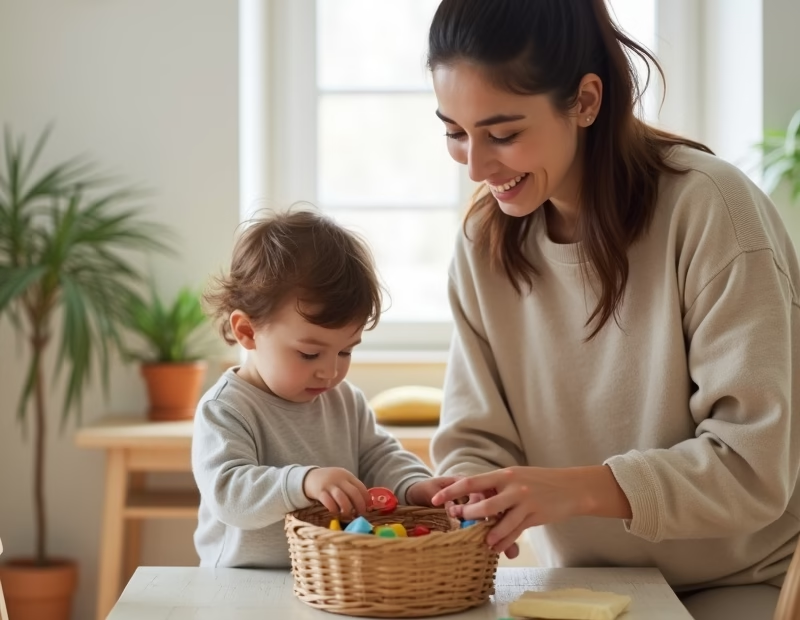
How kids learn responsibility at ages 2 to 4 is through repetition, simple daily jobs, and routines they can follow with support. Small tasks like putting toys away, carrying clothes to the basket, or helping set the table teach children that they can participate, practice, and improve over time.
What responsibility looks like at ages 2 to 4
For a toddler or preschooler, responsibility is not about independence in the adult sense. It is about learning a pattern: I help, I try, I finish what I can, and I return to familiar routines. That is a very different goal from expecting a young child to remember everything, stay focused for long, or complete jobs without reminders.
At this age, children are still building self-control, language, attention, and body coordination. That means the best jobs are short, visible, and easy to repeat. If a task takes only a few minutes and happens regularly, it is much more likely to become part of the child’s daily rhythm.
If you are thinking about child development more broadly, responsibility works best when it matches what a child can do right now, not what we hope they will do in a year.
Why simple routines matter so much
Routines help young children know what comes next. That predictability reduces resistance and makes cooperation easier. When a child hears the same short cue each day, such as “Shoes in the basket” or “Cup on the counter,” the routine eventually does some of the work for the parent.
Simple routines also make jobs feel normal rather than optional. Instead of asking a child to help only when a parent is frustrated, a routine teaches that everyone has a role. Over time, that repeated experience is part of how kids learn responsibility in a calm, steady way.
Good routines for this age are usually connected to natural parts of the day:
- getting dressed
- mealtimes
- tidying toys
- bath and bedtime
- coming home from outside
When you pair one small job with one regular moment, children are more likely to succeed.
Start with jobs that are easy to understand
The best first jobs have a clear beginning and end. Young children do better when they can see what the task is and when it is finished. Vague expectations like “Be good” or “Help clean up” are much harder to follow than “Put the books on the shelf.”
Helpful first jobs for ages 2 to 4 include:
- putting dirty clothes in the laundry basket
- placing shoes by the door
- putting books back on a low shelf
- throwing tissues in the bin
- carrying their plate or cup to the counter
- helping put toys into one basket
- passing napkins or spoons at mealtime
- wiping small spills with help
These jobs are simple, concrete, and part of real family life. That matters. Children are more willing to join in when the task feels meaningful.
Simple jobs that work by age
Age 2
Two-year-olds usually do best with one-step tasks and lots of side-by-side help. They may enjoy routines more than the job itself, so keep expectations low and repetition high.
- Put toys in a basket
- Carry a diaper to the bin
- Place socks in a drawer
- Bring a bib to the table
- Put books in one spot
At this age, your role is to model and say very little. A short phrase such as “Blocks in the box” is often enough.
Age 3
Three-year-olds often enjoy feeling helpful. They can manage slightly more and may remember familiar tasks if they happen every day.
- Put dirty clothes in the laundry basket
- Help set the table with napkins
- Water one small plant with supervision
- Put pajamas on the bed before bath
- Help match socks from the laundry
This is a good age to introduce a tiny after-play tidy-up and one mealtime helper job.
Age 4
Four-year-olds may be able to handle short sequences, especially when they are practiced often. They still need reminders, but they can begin to feel proud of “their job.”
- Clear their place after meals
- Put backpack or coat in the same place
- Help feed a pet with supervision
- Place books, puzzles, and stuffed animals in their spots
- Help pack simple items for an outing
Even at 4, responsibility is still developing. Support matters more than perfection.
How to build routines that children can actually follow
A routine does not need to be long to be useful. In fact, short routines are usually easier for young children to remember. Try choosing one moment of the day that already happens regularly and add one or two small jobs.
Example morning routine
- Get dressed
- Pajamas on bed
- Toothbrush in cup
- Shoes by the door
Example after-play routine
- Books on shelf
- Blocks in bin
- One final check together
Example bedtime routine
- Toys away
- Dirty clothes in basket
- Choose tomorrow’s pajamas or outfit with help
If your child responds well to visual support, a simple picture routine can help. You can explore helpful family resources and printable supports at tools and printables.
What helps young children stick with a job
Children this age usually do not resist because they are lazy. More often, the task is unclear, too long, badly timed, or disconnected from their abilities. A few small adjustments often make a big difference.
Use short instructions
Keep directions concrete. Instead of “Can you clean this mess?” try “Cars in the basket.” Short language is easier to process and remember.
Show first, then help
Many children learn best by watching. Do the first part together, then let your child copy. Over time, step back little by little.
Keep materials within reach
If the basket is too high or the shelf is crowded, the child may fail before they begin. Low hooks, open bins, and easy-to-reach storage make routines more workable.
Link the job to the moment
Tasks are easier when they happen at the same point each day. Shoes go away after coming home. Cup goes to the counter after breakfast. Toys are tidied before snack or bath.
Expect practice, not mastery
Young children need many repetitions. If you need to remind them often, that does not mean the routine is failing. Repetition is part of learning.
How kids learn responsibility without pressure
Parents often worry that they must be firmer for responsibility to stick. In reality, children this young learn best from calm consistency. A pressure-heavy approach can turn simple jobs into power struggles.
Here are a few ways to keep the tone steady:
- describe the job clearly
- stay close when the routine is new
- notice effort before results
- avoid long lectures
- keep your expectations realistic on tired or busy days
You do not need to praise every tiny action, but it helps to notice useful effort. Simple comments such as “You put your cup back” or “You remembered the books” show the child what they did successfully.
If you want more practical ideas for play-based learning and daily habits, the activities on learning activities may also be helpful.
Common mistakes that make routines harder
Giving too many jobs at once
A child who is just learning responsibility does better with one reliable job than with a long list. Start small. Add another task only when the first one feels familiar.
Correcting every detail
If the towels are folded unevenly or the toys are sorted imperfectly, ask yourself whether the goal is learning or neatness. Too much correction can make children stop trying.
Turning jobs into constant tests
Children learn from regular participation, not from being caught out. Gentle reminders are part of the process.
Using jobs only as punishment
Routine jobs should feel like belonging, not shame. If every task appears only after conflict, children may connect helping with negative emotions.
A sample week of simple jobs and routines
If you want a practical starting point, here is a simple pattern you can copy and adjust.
Morning
- Put pajamas on bed or in basket
- Place toothbrush back in holder
- Carry breakfast cup to counter
After play
- Choose one category to tidy first, such as blocks or books
- Do a one-minute tidy together
Evening
- Dirty clothes in basket
- Choose one item for tomorrow, such as socks or a shirt
That is enough. A few repeated actions done daily are often more effective than a long chore chart that no one wants to maintain.
When a child refuses to help
Refusal is normal sometimes, especially when a child is tired, hungry, distracted, or deeply engaged in play. Try to stay matter-of-fact rather than escalating the moment.
You can:
- give a short warning before the transition
- offer two acceptable choices, such as “Books first or blocks first?”
- join in for the first minute
- reduce the task if it is too big
- save teaching for a calmer moment
If refusal happens often, look at the routine itself. It may need to be simpler, earlier, more visual, or more connected to the child’s abilities.
Tools that can support the routine
Some families find it useful to use a very simple visual checklist or picture card for common parts of the day. This can be especially helpful when a child understands better through seeing than through hearing a long set of instructions. You can browse more parenting support and practical resources throughout the site.
If you like having a trusted reference at home for everyday parenting questions in the early years, one optional resource some parents find useful is Mayo Clinic Guide to Your Baby’s First Years. It can be a helpful general reference alongside your own routines and observations.
The real goal: participation and confidence
The biggest benefit of simple jobs is not a cleaner house. It is the message children receive: you are capable, you belong here, and your actions matter. When a child helps with ordinary family tasks, they practice attention, memory, persistence, and cooperation in a way that feels natural.
That is why small jobs can be so effective. They fit into the day, they repeat often, and they show children what responsibility looks like in everyday life. For ages 2 to 4, that steady practice matters far more than doing a task perfectly.
If you want an easy next step, try a simple routine chart or printable from our tools and printables page. A clear visual can make daily jobs easier for young children to follow.
FAQ
What are good first chores for a 2-year-old?
Good first chores are very small and easy to repeat, such as putting toys in a basket, carrying clothes to the laundry, or placing books on a low shelf. The goal is participation, not perfect results.
How many jobs should a 3-year-old have?
Usually one or two regular jobs are enough. A 3-year-old does better with a small number of familiar tasks done every day than with a long list that changes often.
Should I use rewards for simple routines?
Many children respond well to calm encouragement, clear expectations, and repetition without needing rewards. If you use a sticker chart or visual tracker, keep it simple and focused on consistency rather than pressure.
What if my child makes more mess while helping?
That is very common at this age. Helping is still useful even when it is messy. Young children are learning the steps, building coordination, and getting used to family routines.
How kids learn responsibility if they need constant reminders?
Reminders are a normal part of learning for ages 2 to 4. Responsibility grows through repeated practice with support. Over time, familiar jobs usually need fewer prompts.
Do chores need to happen every day?
Not every task has to happen daily, but routines work best when they are predictable. A small job attached to a daily moment, such as after breakfast or before bed, is often easiest for young children to remember.
How kids learn responsibility in the early years is usually much simpler than parents expect. A few small jobs, linked to steady routines, can help children practice helping, remembering, and following through in ways that fit ages 2 to 4.
Start with one manageable task, keep your guidance calm, and let repetition do its work. Over time, those small daily moments build real responsibility.
None