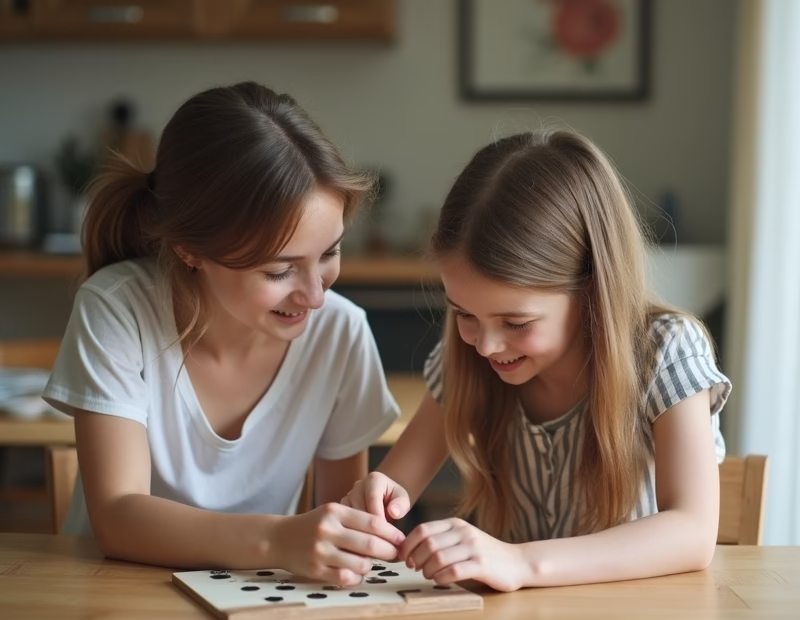
If you want to know how to teach patience, start with small waiting challenges, clear routines, and simple games that reward self-control rather than speed. Older children usually learn best when parents stay calm, set short practice moments, and praise the effort of waiting, not just the result.
Why patience can be hard for 10- to 12-year-olds
Children in this age group often look older than they feel. They may be capable in school, sports, or hobbies, but still find it hard to wait for a turn, pause before reacting, or stick with a slow task. That does not mean they are being difficult on purpose. It usually means the skill still needs practice.
At this age, children are balancing stronger opinions, growing independence, social pressures, and more complex emotions. They may want quick answers, fast progress, and immediate rewards. Patience asks them to do the opposite: pause, tolerate discomfort, and trust that something worthwhile will come later.
When parents think about how to teach patience, it helps to focus on daily habits rather than one big lesson. Small, repeated practice tends to work better than long lectures.
What helps children learn patience
Before moving into games and routines, it helps to know what supports this skill best.
- Short practice: Small waits are easier to learn from than long ones.
- Predictability: Children cope better when they know what is happening next.
- Specific praise: Notice the waiting skill itself, such as taking a breath or staying calm.
- Modelling: Children learn from how adults handle delays and frustration.
- Real-life use: Patience grows faster when it is practised in ordinary family moments.
A useful goal is not to make your child silently tolerate everything. A healthier goal is to help them wait, cope, and respond with more self-control.
8 simple patience-building games to try
1. Slowest wins
Choose a simple task your child can do safely, such as folding socks, lining up books, building a small tower, or carrying plastic cups from one room to another. The challenge is to do it slowly and carefully rather than quickly.
Set one rule: no rushing. If something drops or gets skipped because of speed, the turn restarts.
Why it helps: Many children connect success with speed. This game teaches that control and steadiness matter too.
Try saying: “This time we are practising calm and careful, not fast and first.”
2. The pause game
Ask your child simple questions they know well, but tell them they need to pause for three seconds before answering. You can make it playful with categories like favourite foods, countries, animals, films, or sports.
For older children, increase the challenge by asking them to pause, take one breath, and then answer.
Why it helps: It builds the habit of not reacting instantly, which is useful in conversations, sibling conflicts, and school situations.
3. Turn-token challenge
During a family game, homework help, or a group conversation, give each person a few tokens such as coins, buttons, or folded paper slips. A person may speak or take a big turn only after placing one token in the middle. Once their tokens are gone, they need to wait until everyone has used theirs.
Why it helps: This makes turn-taking visible and gives children practice waiting without interrupting.
4. Delayed choice
Offer two pleasant options, but ask your child to wait two or three minutes before choosing. For example: “You can have apple slices now or popcorn with the film later. Take a minute to decide.”
Why it helps: It teaches that not every decision needs an immediate answer and that waiting can improve choices.
5. Puzzle piece release
If your child likes puzzles, LEGO, model kits, or craft projects, keep back a small number of pieces and hand them over one at a time after short intervals. You can use a timer for one or two minutes.
Why it helps: It gives repeated practice with small waits while the child is motivated to continue.
Tip: Keep the delay short enough that it feels manageable, not irritating.
6. Story stretch
Start telling a made-up story together, but each person may add only one sentence per turn. Your child has to wait while others think and add their parts. To make it more engaging, choose a theme such as space, detective mysteries, camping, or magical creatures.
Why it helps: It combines waiting, listening, and flexible thinking.
7. Silent snack challenge
Place a snack in front of your child and agree on a short waiting time before eating. Start very small, such as 30 to 60 seconds. During the wait, ask them to notice the smell, colour, or texture.
Why it helps: It helps children tolerate anticipation and builds a pause between wanting and doing.
Important: Keep this light and occasional. It should feel like a game, not control around food.
8. Team timer missions
Set a timer for five or ten minutes and work together on a boring but manageable task, such as tidying a shelf, sorting laundry, or packing for tomorrow. The goal is to keep going until the timer ends without complaining, quitting, or arguing.
Why it helps: Patience is often needed for ordinary tasks, not just waiting in line. This game helps children stay with a task even when it is not exciting.
Simple daily routines that teach patience naturally
Games are useful, but routines are where the skill really settles in. Here are some easy ways to build patience into family life.
Use a predictable waiting script
When your child has to wait, use the same calm language each time. For example:
- “I hear you. I will help when I finish this call.”
- “It is hard to wait. Your turn is next.”
- “You can ask once, then wait quietly.”
- “While you wait, choose one helpful job or one calm activity.”
This reduces arguing because the expectation stays the same.
Create a short waiting menu
Some children get more frustrated when they have nothing to do. Make a simple list called “While I wait, I can…” Include a few realistic options such as:
- get a drink
- read two pages
- shoot five baskets
- draw for three minutes
- organise school supplies
- do ten stretches
You can find practical ideas in the site’s tools and printables section if you want something ready to use.
Practise one planned wait every day
Pick one low-stress moment each day for patience practice. It might be waiting before dessert, waiting while you finish unloading groceries, or waiting two minutes before asking for help with homework.
Keep it short and predictable. Say, “This is our patience practice,” so it feels purposeful rather than random.
Delay non-urgent requests slightly
If your child asks for something that does not need an immediate response, try a brief pause before giving it. For example, “Yes, I can look in five minutes” or “You may use the game after your bag is packed and you wait until the timer rings.”
This teaches that not every want is met instantly.
Build recovery into routines
Children will lose patience sometimes. That is normal. What matters is showing them how to recover. After a frustrated moment, use a simple repair routine:
- pause
- take one breath
- say what you wanted
- ask again respectfully
This helps children see patience as a skill they can return to, even after a rough start.
What to say when your child struggles to wait
Parents often ask for practical language because the moment can feel tense. These scripts can help.
When your child interrupts repeatedly
“I want to hear you. Put your hand on the counter so I know you are waiting. I will answer when I finish this sentence.”
When your child gets annoyed by slow progress
“This is taking longer than you hoped. Let us do the next small step instead of rushing the whole thing.”
When your child says, “This is boring”
“Sometimes patience feels boring. You can still do hard waiting for two more minutes.”
When they want something immediately
“I know you want it now. Wanting it now does not always mean getting it now.”
When they do manage to wait
“You really wanted to jump in, but you waited your turn. That took self-control.”
Specific praise is more useful than a general “good job” because it tells your child exactly what skill they used.
Common mistakes that can make patience harder
Making the wait too long too soon
If practice always feels overwhelming, children learn that waiting is miserable. Start with small delays and build gradually.
Giving in after repeated complaining
If a child learns that whining speeds things up, waiting becomes even harder next time. It is better to stay calm, repeat the limit, and follow through.
Using shame
Comments like “You are so impatient” can make children feel stuck in that role. It is more helpful to describe the behaviour and the next step: “Waiting is hard right now. Try again with one calm breath.”
Expecting patience when the basics are off
Children usually cope less well when they are hungry, overtired, overwhelmed, or rushing between tasks. A little structure can prevent many patience problems.
How to make practice work for this age group
Children aged 10 to 12 often respond better when they feel respected. Keep the tone matter-of-fact rather than babyish. You can say, “This is part of getting stronger at handling frustration,” instead of treating the activity like something only for small children.
It also helps to connect patience to real goals they care about, such as:
- staying calmer with siblings
- getting through homework without exploding
- improving in sports or music
- saving money for something they want
- handling group work and friendships better
If your child likes structured activities, you may also find more ideas in learning activities that support focus, planning, and self-control.
A simple weekly plan parents can copy
If you want an easy starting point, try this for one week:
- Monday: Play Slowest Wins for 10 minutes.
- Tuesday: Use one planned wait before a snack or screen time.
- Wednesday: Practise the Pause Game during dinner conversation.
- Thursday: Use a waiting menu while you finish one household task.
- Friday: Do a Team Timer Mission together.
- Weekend: Notice and praise one real-life moment of patience.
You do not need to do everything perfectly. The value comes from repetition, not intensity.
One optional resource for parents
If you like having a reliable parenting reference at home, the Mayo Clinic Guide to Your Baby’s First Years can be a helpful general resource for earlier stages of child development and family routines. It is not necessary for teaching patience to older children, but some parents like having one steady guide on hand.
When to step back and simplify
If patience practice is turning into daily conflict, make it easier. Choose one routine, shorten the waiting time, and focus more on calm repetition than correction. A child who feels constantly criticised is less likely to keep trying.
You can also model your own patience out loud: “I am annoyed that this is taking so long, so I am taking a breath and doing one step at a time.” That kind of everyday example is powerful.
For more practical parenting support, you can also browse the main Zadjecu.net home page for related guides.
If you want an easy next step, take a look at the tools and printables page for simple resources you can use to create a waiting menu or a short patience practice routine at home.
FAQ
How long does it take to build patience in a child?
It usually takes steady practice over time rather than one quick fix. Many parents notice small changes within a few weeks when they use the same routines, language, and expectations consistently.
What is the best way to teach patience to a 10- or 12-year-old?
The best approach is usually a mix of short games, predictable waiting moments, and calm parent responses. Older children often respond well when the skill is linked to real-life goals like handling frustration, improving focus, or getting along better with others.
Should I reward my child for being patient?
Small encouragement can help, especially at the start, but it is usually better to praise the skill itself rather than rely on prizes every time. Specific feedback such as noticing calm waiting or respectful asking helps children build internal motivation.
What if my child complains every time they have to wait?
Stay calm, keep the waiting time short, and avoid changing the limit because of complaining. You can acknowledge the feeling, repeat what will happen next, and offer one simple waiting activity.
Can games really help with patience?
Yes, because games give children a low-pressure way to practise waiting, taking turns, and slowing down. The key is choosing simple games and repeating them often enough that the skill starts to carry over into daily life.
Is impatience normal at this age?
Yes, impatience is common in older children and early tweens. They are still learning how to manage frustration, delay gratification, and cope with boredom, so patience usually needs regular practice and support.
If you are working out how to teach patience, keep it simple and steady. Short games, predictable routines, and calm language often do more than repeated reminders to “be patient.”
Your child does not need to master this skill all at once. With regular practice and realistic expectations, patience can grow little by little in ways that make daily family life feel easier.
None